AI Lead Finder
 Email Finder
 Email Verifier
 Phone Finder
 Intent Signals
 CRM Enrichment/Cleaning
 API
API

The teams winning deals today aren't waiting for prospects to raise their hand. They're reaching out weeks earlier, armed with context, because they know something their competitors don't: that a prospect just got promoted, just posted about a pain point, or just started researching solutions in their category. That knowledge is buying signals, and they've become an essential layer for any modern outbound strategy.
In this guide, we'll cover what buying signals are, how to act on them, and how Findymail Signals helps you get there first.
Findymail Signals monitors the web 24/7, filters leads by your ICP, and delivers enriched contacts ready to contact, without the enterprise price tag.
Sign up today and get 10 credits free.
What Is a Buying Signal? A buying signal is any behavioral or contextual cue that suggests a prospect is moving closer to a purchase decision. The best signals don't just tell you who to target, they tell you when, so you reach out before your competitors even know the window is open.
Why Buying Signals Matter:
1. Timing is the variable most teams ignore: 70% of the B2B buyer journey now happens before a prospect talks to anyone in sales. By the time they fill out your form, the decision is practically made.
2. The buyer journey is increasingly invisible: 60% of B2B buyers now use AI tools like ChatGPT or Gemini to build vendor shortlists, meaning more of the research happens where you can't see it.
3. First-mover advantage is real: 95% of buyers end up purchasing from a vendor already on their Day One shortlist. Getting in early isn't a nice-to-have. It's the strategy.
Top Buying Signal Tools at a Glance:
1. Findymail Signals
2. Intentsify
3. Bombora
4. 6sense
5. Lead Onion
6. Demandbase
What Are Buying Signals? (Definition)
A buying signal is any behavioral or any contextual cue that suggests a prospect is moving closer to a purchasing decision. Think pricing page visits, job title changes, funding announcements, or a LinkedIn post about a problem your product solves.
But not every signal is created equal. A prospect visiting your product page is encouraging. That same prospect visiting three times in a week, right after a funding round? That's worth acting on.
Buying signals don't just tell you who to target. They tell you when to reach out.
Why Buying Signals Matter
Buying has changed. It's more digital, more AI-influenced, more self-driven, and by the time a prospect enters your funnel, they've already done their homework, compared their options, and quietly eliminated half the market. Including, possibly, you.
The uncomfortable reality is that the most consequential moments in the buying process now happen somewhere you can't see. And no amount of tracking pixels or attribution models is going to fix that.
Like I’ve already mentioned, the organizations winning today have accepted this and moved on. They've stopped waiting to be found and started building systems that detect intent early and act on it fast. The numbers make a pretty strong case for doing the same:
- 70% of the B2B buyer journey now happens in this invisible layer. (Gartner).
- 60% of B2B buyers now use tools like ChatGPT or Gemini to build vendor lists, summarize content, and surface competitors. (Google, October 2025).
- 95% of buyers end up purchasing from a vendor already on their Day One shortlist. (6sense, 2025 Buyer Experience Report).
By the time a prospect fills out your form, the decision is practically made. Timing isn't just a nice-to-have. It's the variable that determines whether you're even in the conversation.
First-Party vs. Third-Party Intent Data: What's the Difference?
Before diving into signal types, it's worth clarifying two terms you'll see throughout this guide.
First-party intent data is information collected directly from your own properties. Website visits, demo requests, content downloads, these are signals generated by people actively engaging with your brand.
Third-party intent data is collected externally, across the broader web. Job postings, funding announcements, review site activity, content consumption across publisher networks, these signals happen completely outside your ecosystem, which is what makes them so valuable for getting in front of prospects early.
Types of Buying Signals
- Verbal Signals: These happen in live conversations and are the easiest to act on. Pricing questions, contract terms, competitor comparisons, or a prospect mentioning a deadline ("We need something in place by Q4") are all green lights. When someone asks about pricing, they're not just curious. They're comparing you to a budget.
- Behavioral / Digital Signals: First-party signals from your own properties. Repeated visits to your pricing or case study pages, demo requests, trial sign-ups, and content downloads all indicate a prospect is moving from awareness to consideration.
- Contextual / Event-Based Signals: These are third-party triggers that indicate a buying window is opening. A new hire often means a tech stack review. A funding round means a new budget to work with. A leadership change means new priorities. These signals happen whether or not a prospect has ever heard of you.
- Social & Engagement Signals LinkedIn posts about pain points, questions in industry communities, or engagement with competitor content. Subtle, but often the earliest signal of all.
Top Buying Signal Tools in 2026
That said, there’s a catch: buying signals don't live in one place. They're spread across job boards, press releases, review sites, social media, and product usage data. Most teams end up cobbling together three to five tools, patching gaps with spreadsheets, and still missing the moments that matter.
That's exactly the problem purpose-built signal monitoring solves. Instead of hunting across a dozen sources, the right tool surfaces intent as it happens, filtered to your ICP, with contact data ready to go. Here are the tools worth knowing about.
1. Findymail Signals: Best for Signal Monitoring and Verified Contact Data, Built for Outbound
Overview:
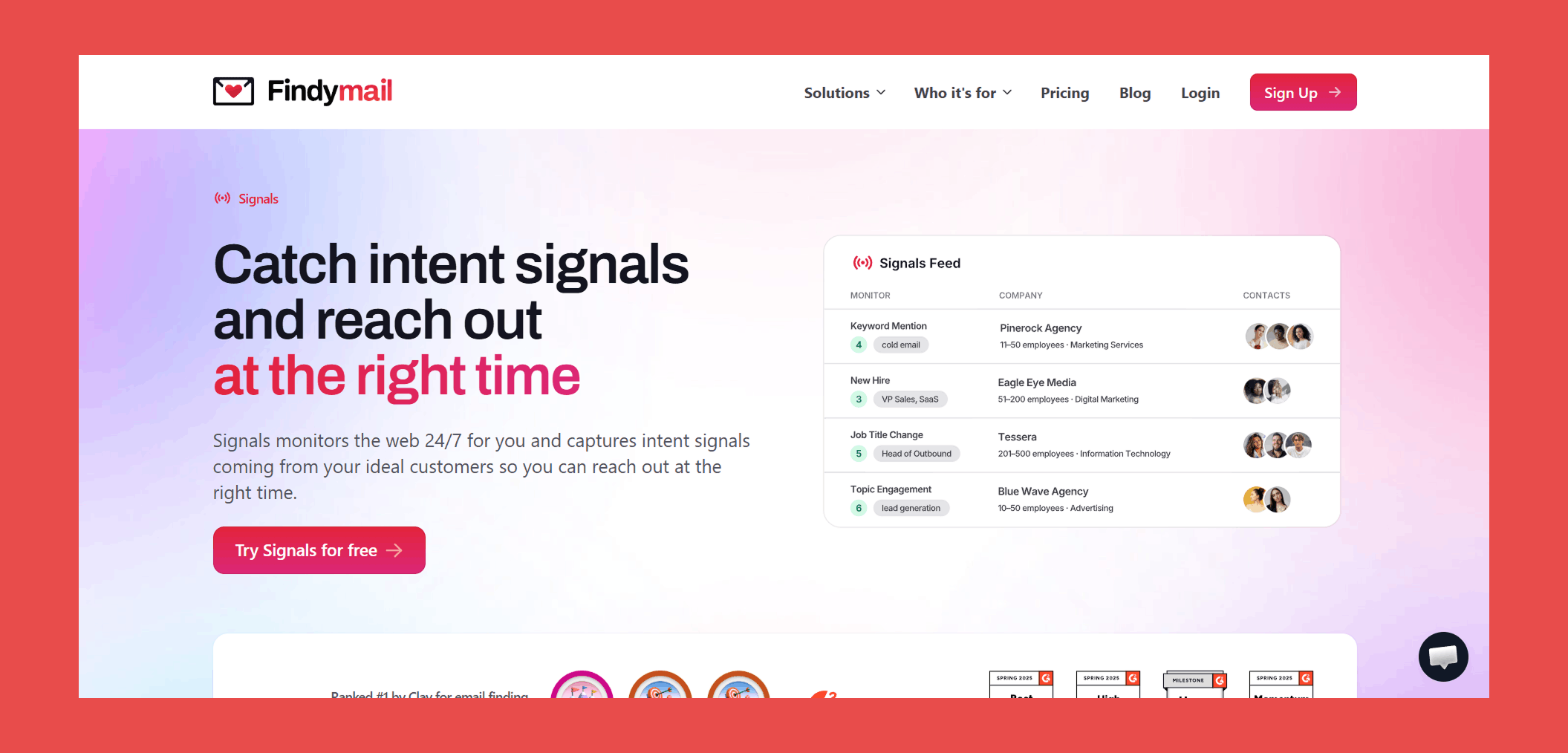
Findymail has always been the go-to for verified B2B contact data. Now, we're taking it a step further. Introducing Signals: Findymail's newest feature that monitors the web 24/7 for buyer signals and delivers high-intent leads directly to you, enriched and ready to contact.
The idea behind Findymail’s Signals is simple. When someone gets promoted, just joined a company in your ICP, or just posted about a problem you solve, they are far more likely to respond. The challenge is knowing when those moments happen. Signals solves that, without the enterprise price tag or the three-tool stack. Here's how it works:
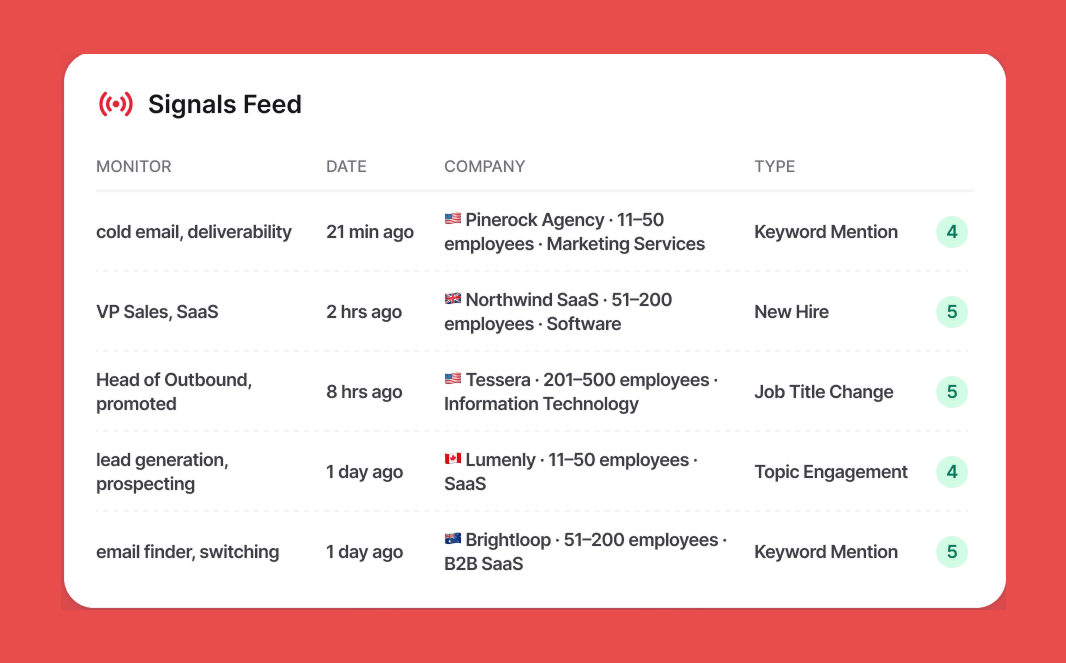
- Set up your monitors: Choose your signal type, set keywords or filters, and define your ICP criteria. Once live, monitors run continuously in the background.
- Get enriched leads delivered automatically: Every matched lead comes with company info, email, phone and social URL. Request email and phone enrichment with a single click.
- Push directly to your tools: Send leads natively into your CRM or sequencer via webhook. Signal to outreach in minutes, not days.
Signal types include new hires, job title changes, keyword mentions, and topic engagement, all filterable by industry, company size, country, seniority, and job title. Unlike most signal tools that require a separate enrichment layer, Findymail combines monitoring with industry-leading contact verification in one place.
Key Features:
- Signal Monitors: Choose your signal type, set keywords or filters, and define your ICP criteria. Once live, monitors run continuously in the background.
- Auto-Enriched Leads: Every matched lead comes with company data, job titles, and LinkedIn URLs. Request email and phone enrichment with a single click.
- ICP Filtering: Filter every signal by industry, company size, country, seniority, and job title. Only receive leads that actually match.
- Email/Phone Finder: Findymail finds and verifies emails and phone numbers in real time at the moment you request it.
- Catch-All Email Verification: Every email is run through syntax validation, DNS records, SMTP server verification, catch-all detection, and disposable email screening. Only deliverable, valid addresses make it through.
- Intellimatch: Describe your ideal customer in plain English and get a verified list of high-fit companies back in seconds, with the option to include verified B2B contact data for every lead.
- Security Compliance: SOC 2 and GDPR compliant.
Ratings:
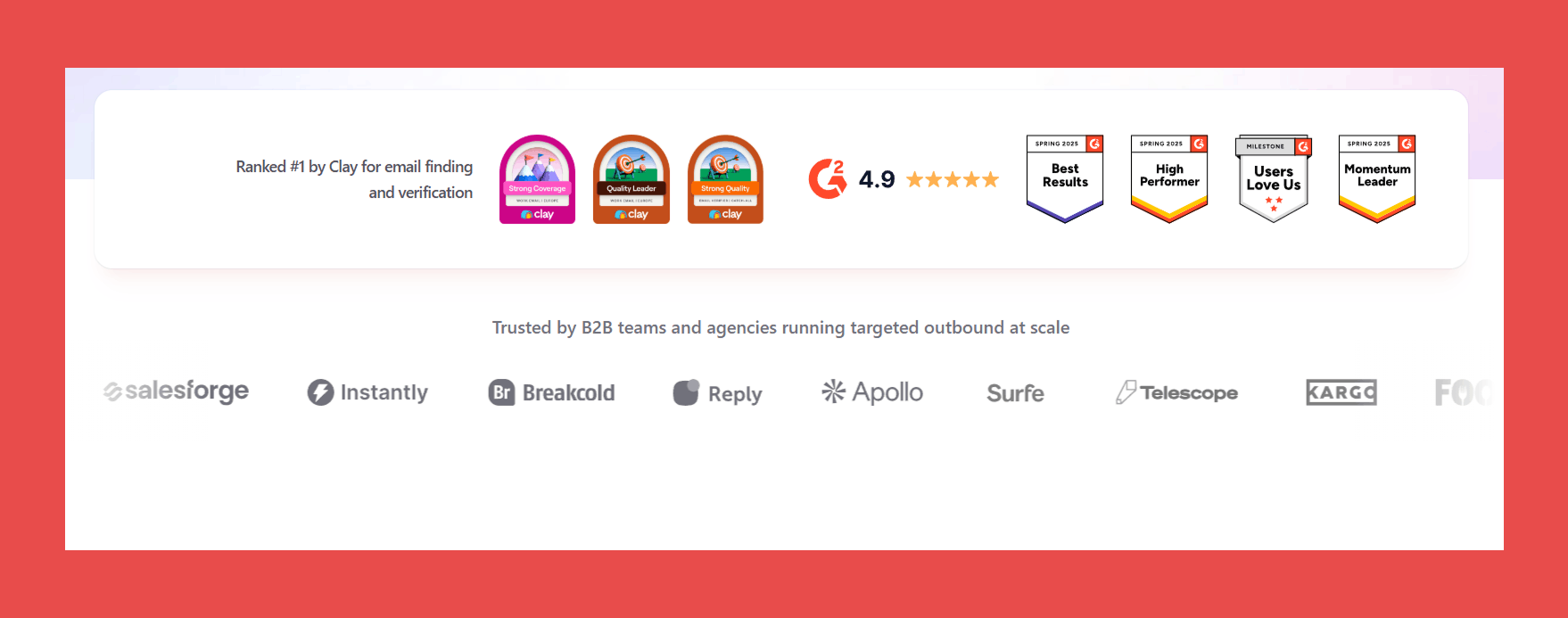
- G2: 4.9/5 (56)
- Capterra: 4.9/5 (7)
Pros:
- Signal monitoring and verified contact enrichment in one place. No stitching tools together.
- Industry-leading verification accuracy backed by a sub-5% bounce rate guarantee and a refund policy to match.
- Proprietary catch-all detection that goes beyond the "risky" flag most competitors hide behind, returning a definitive deliverable verdict instead.
Cons:
- Newer to the signal monitoring space compared to established enterprise platforms.
- No native sequencing or outreach features, so it works best paired with a dedicated sending tool.
Pricing:
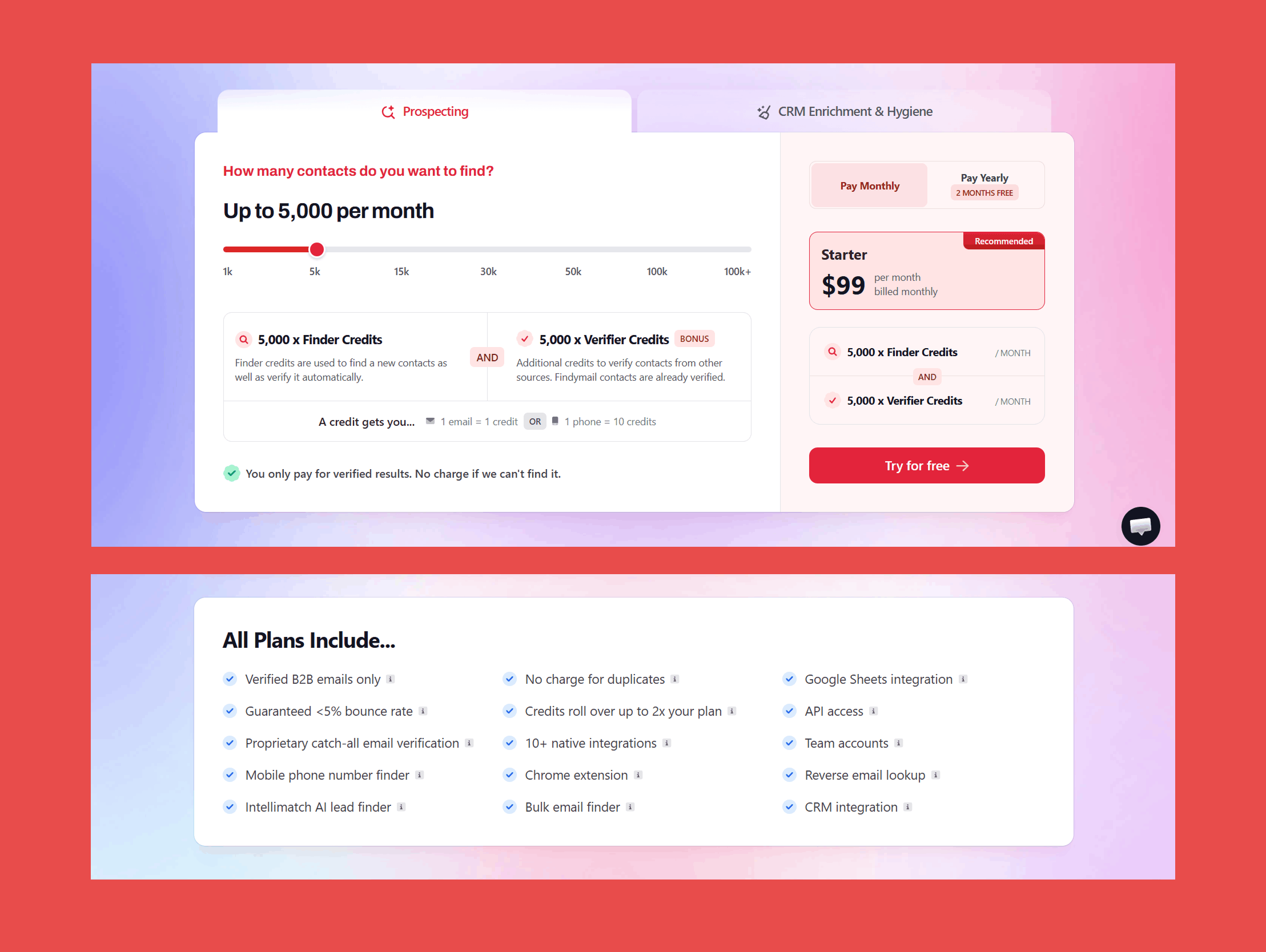
Findymail works on credit-based model with credits varying by signal type: New Hire and Job Title Change cost 1 credit per signal. Keyword Mention and Topic Engagement cost 1 to 3 credits depending on ICP filters applied. Here’s a quick breakdown of each plan:
- Basic: $49/mo – 1,000 x Finder Credits + 1,000 x Verifier Credits/mo
- Starter: $99/mo – 5,000 x Finder Credits + 5,000 x Verifier Credits/mo
- Business: $249/mo – 15,000 x Finder Credits + 15,000 x Verifier Credits/mo
- Business Plus: $399/mo – 30,000 x Finder Credits + 30,000 x Verifier Credits/mo
- Scale 50K: $549/mo – 50,000 x Finder Credits + 50,000 x Verifier Credits/mo
- Scale 100K: $849/mo – 100,000 x Finder Credits + 100,000 x Verifier Credits/mo
- Enterprise: Custom – Custom Finder Credits + Custom Verifier Credits/mo
Every plan includes finder and verifier credits, real-time verification, and a sub-5% bounce rate guarantee. Signal monitoring and verified contact data in one place, starting at $49/mo.
No enterprise contracts. No hidden costs. No separate tools.
2. Intentsify: Best for Multi-Source Intent Aggregation and Managed Activation
Overview:
Most intent data platforms give you a single signal feed and leave the rest to you. Intentsify takes a different approach. Rather than owning one data pipe, it aggregates and validates signals across multiple proprietary and third-party intent sources, then helps you act on them through managed programmes including targeted advertising and content syndication.
The result is higher signal accuracy and a done-for-you activation layer that removes a lot of the operational heavy lifting. For teams with the budget to match, it's hard to argue with that pedigree.
Key Features:
- Orbit Intelligence: Intentsify's core intelligence engine, monitors over 1.1 trillion monthly intent signals across B2B content sites, delivers intent, contact, firmographic, technographic, digital, and business events data.
- Buying Group Intent: Buying Group Intent identifies which specific decision-makers are doing the research, what stage they're at, and how their interest levels compare across the buying committee. Individual topic scores per persona, plus an aggregated buying group interest score (high, medium, or low).
- Audiences: AI-powered audience segments built on intent signals, firmographic, technographic, persona, and business event data.
Ratings:
- G2: 4.4/5 (33)
- Capterra: N/A
Pros:
- Highest overall Current Offering score in the Forrester Wave Q1 2025, the strongest analyst endorsement in the category.
- Multi-source signal aggregation produces more reliable intent scores than single-source providers.
- Strong customer support, consistently praised for responsiveness and strategic partnership.
Cons:
- Cost per lead is on the expensive side, which limits scalability for teams with tighter budgets.
- The managed services model is a great fit for marketing-led teams, but less ideal for self-serve ops teams that prefer to own their own workflows.
- Pricing is not published and requires a full sales process to understand total costs.
Pricing:
- Not publicly available. Contact sales to learn more.
3. Bombora: Best for Enterprise Third-Party Intent
Overview:
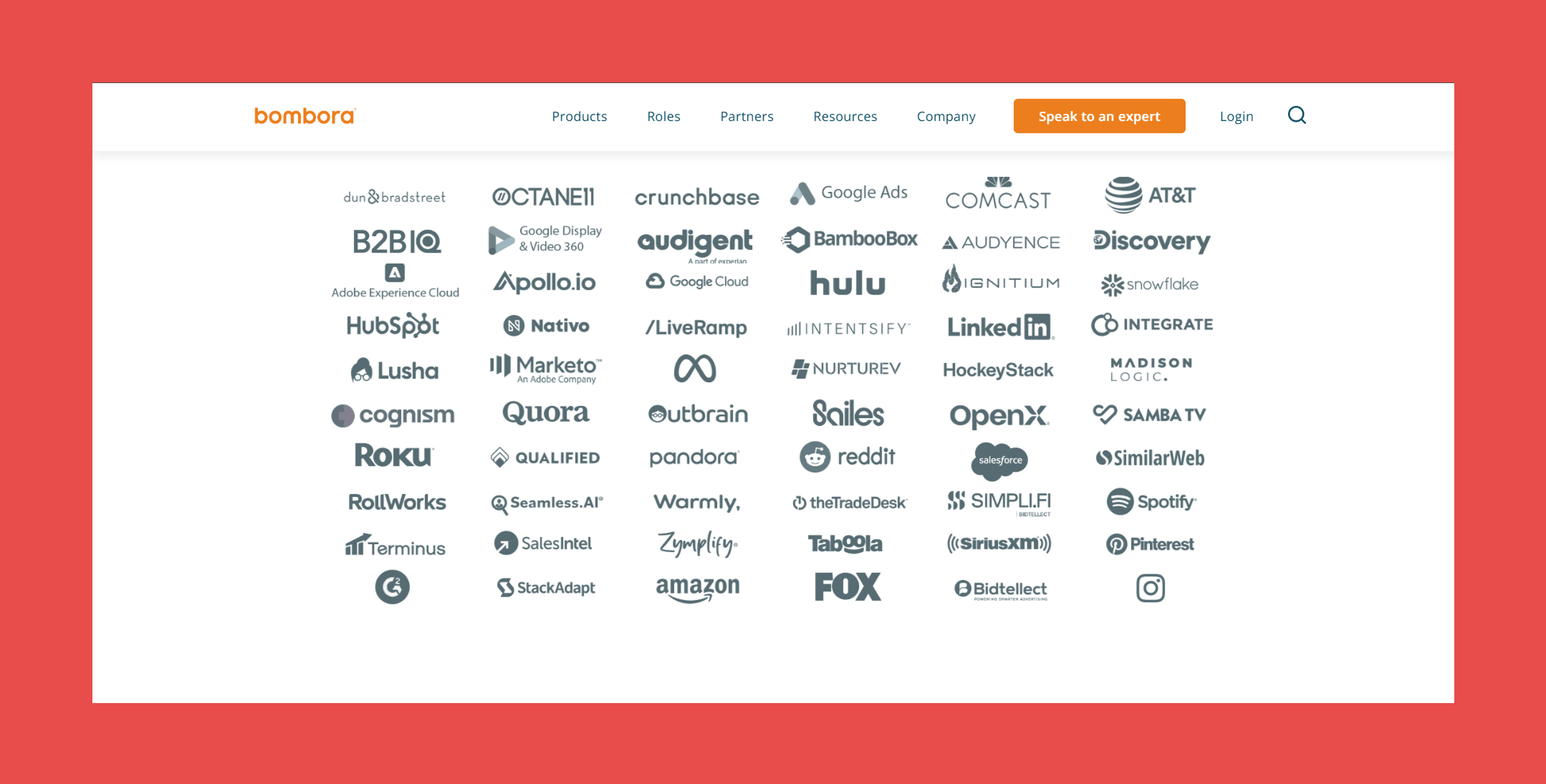
Bombora is the category pioneer for third-party intent data. It aggregates content consumption signals from a co-op network of 5,000+ B2B publishers and uses its Company Surge metric to identify accounts researching specific topics at rates above their historical baseline. If a target account is quietly doing their homework, Bombora is how you find out. The data quality is premium, but so is the price tag.
Key Features:
- Company Surge®: Identifies which businesses are actively researching products or services like yours and your competitors'. Compatible across nearly all tech stacks and use cases.
- Data Co-op: Signals sourced from 5,000+ premium B2B publishers, with 86% of co-op data shared exclusively with Bombora.
- Topic Tracking: Monitor intent across 12,000+ industry-specific topics.
- Audience Builder: Segment and prioritise accounts by surge strength, vertical, and company size.
- Consent-driven Data: Built to meet GDPR and CCPA standards. No scraped or bidstream data.
Ratings:
- G2: 4.4/5 (161)
- Capterra: 4.5/5 (2)
Pros:
- One of the highest-quality third-party intent datasets available.
- Consent-based data collection, not scraped or bidstream.
- Strong fit for sophisticated ABM campaigns.
Cons:
- Enterprise pricing puts it out of reach for most SMB and mid-market teams.
- Requires existing ABM infrastructure to get full value.
Pricing:
- Not publicly available. You'll need to contact their sales team for a quote.
4. 6sense: Best for predictive AI scoring
Overview:
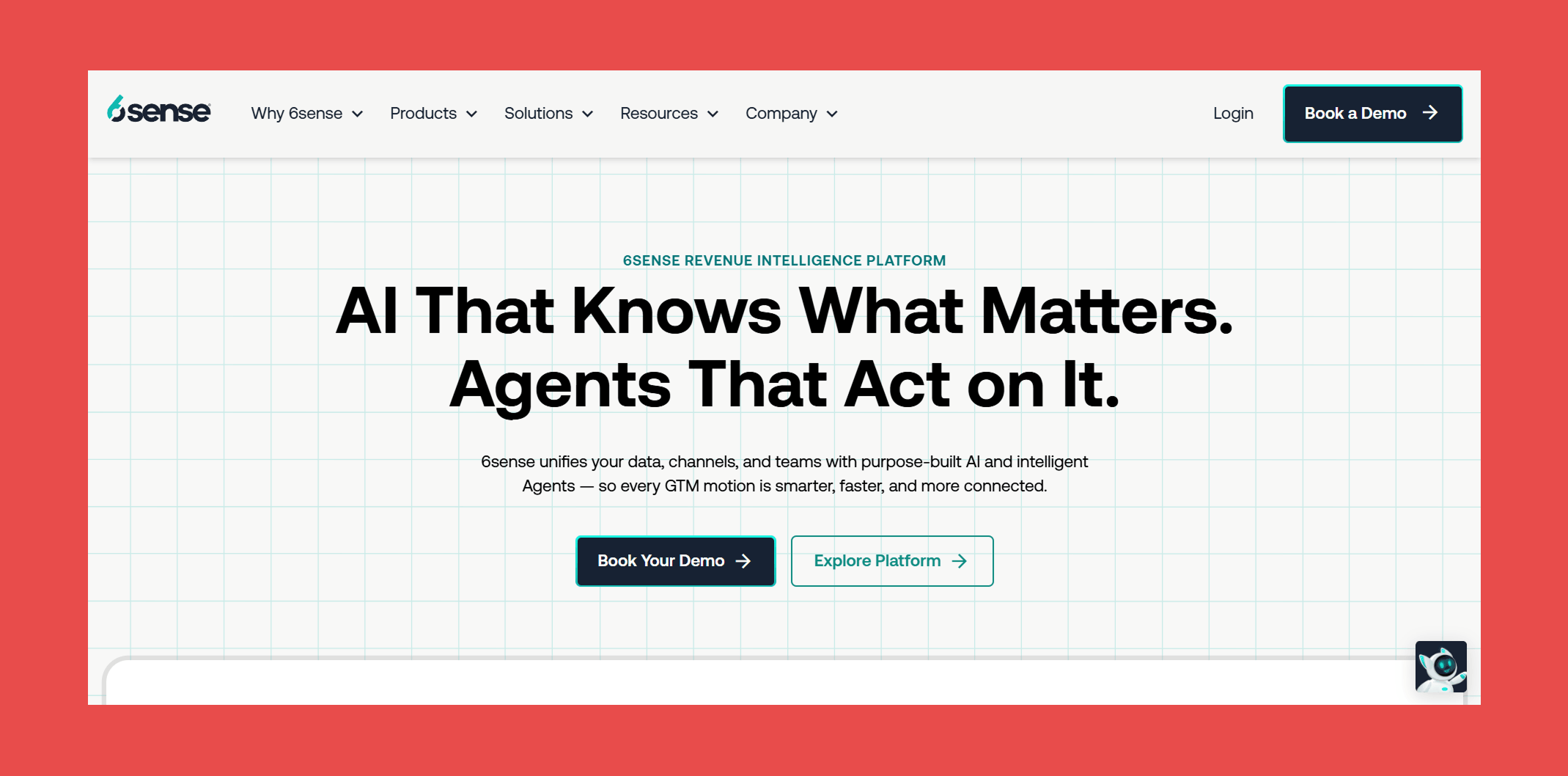
6sense combines third-party intent signals with predictive AI scoring to identify accounts by buying stage, not just behaviour. Named one of five Forrester Wave Leaders for B2B intent data (Q1 2025), it integrates across ads, email, and web personalization for full-funnel ABM execution. If you want to know not just who is in-market but where they are in the decision process, 6sense is built for that.
Key Features:
- Signalverse™: Captures real-time intent, company and contact data, and industry-leading web deanonymisation.
- 6AI (Predictive AI Scoring): Processes signals into meaningful, actionable insights using AI-driven models.
- Multi-Channel Orchestration: AI Agents run personalised campaigns across email, advertising, and omnichannel workflows, designed around your ICP.
- Revenue Marketing: Unifies data, channels, and teams to put AI Agents to work across your entire GTM motion.
- Sales Intelligence: Helps sellers prioritise accounts, personalise outreach, and act with precision based on buyer behaviour.
Ratings:
- G2: 4.0/5 (937)
- Capterra: 4.6/5 (30)
Pros:
- Identifying duplicate accounts that share the same domain is straightforward, keeping your data clean and your targeting precise.
- Sales Intelligence gives clear visibility into buyer behaviour and account insights, making it easier to align sales and marketing around opportunities most likely to convert.
Cons:
- Enterprise pricing makes it inaccessible for most smaller teams.
- Intent signals aren't always precise, and contact data can be incomplete or outdated, a common limitation across platforms at this level.
- The LinkedIn Sales Navigator plugin has been reported as non-functional for over a year.
Pricing:
- Not publicly available. You'll need to contact their sales team for a quote.
5. Lead Onion: Best for All-in-One Intent and Outreach
Overview:
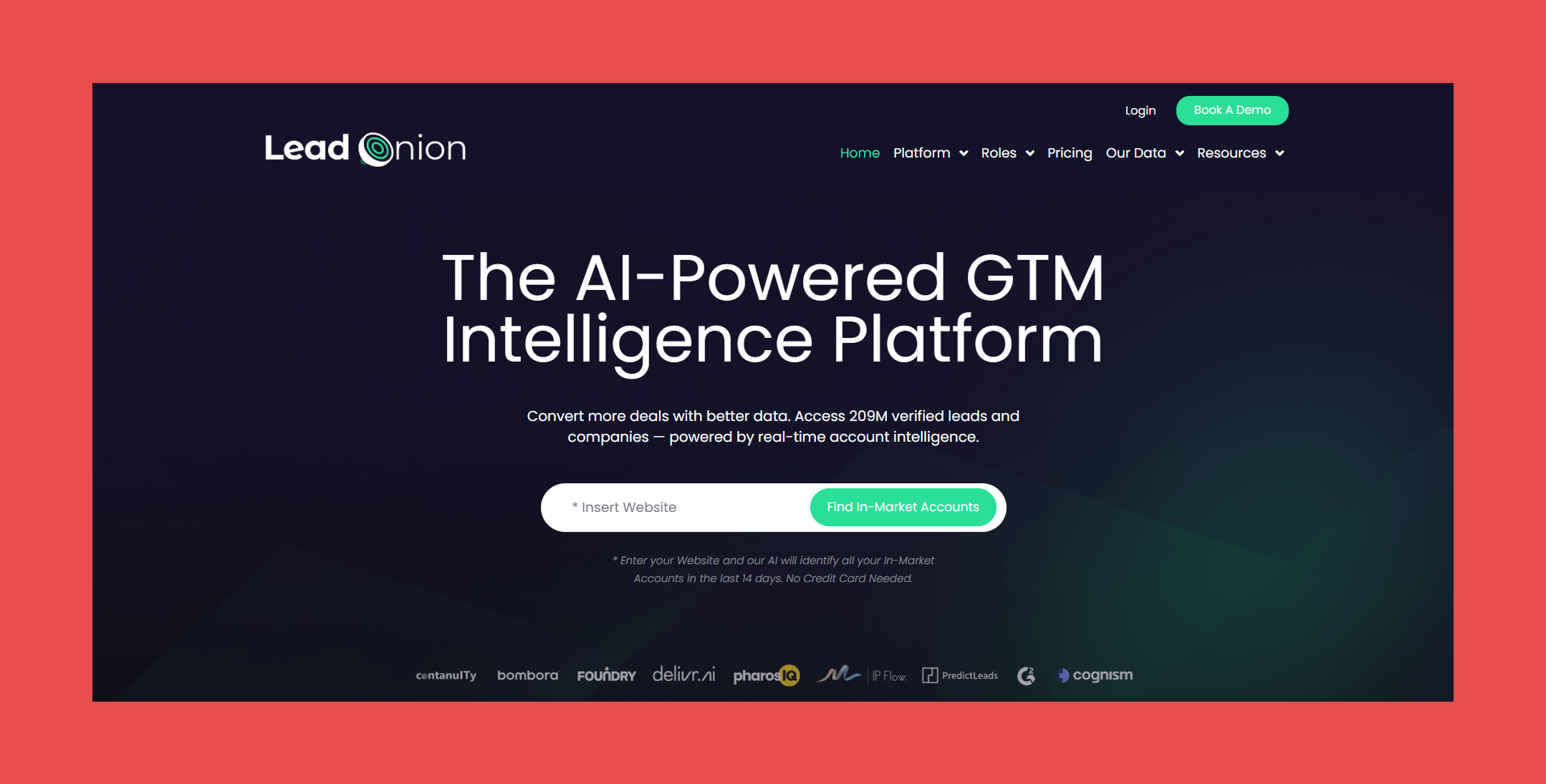
Lead Onion combines intent data, prospecting, and built-in outreach tools into a single platform. Where most tools hand you the data and leave the rest to you, Lead Onion is designed to take you from signal to conversation without switching tabs. It aggregates intent from 20+ sources, pairs it with verified contact data, and automates the outreach cadences to match. A solid option for teams that want coverage and activation under one roof.
Key Features:
- Multi-Source Intent Data: Aggregates signals from 20+ data sources, including topic intent and buyer activity, into one unified view.
- Person-Based Intent: Identify the actual individuals doing the research, not just the company, with full contact records attached.
- Website Visitor Identification: Reveal visiting companies and key contacts in real time.
- Leadflows: Automatically routes verified contacts into the right cadences and workflows the moment intent is detected.
Ratings:
- G2: 4.3/5 (74)
- Capterra: N/A
Pros:
- Intent data, verified contacts, and outreach automation in one place.
- 20+ intent sources gives you broader signal coverage than most single-source tools.
- Strong customer support, with regular check-ins and hands-on onboarding.
Cons:
- Some users report data accuracy inconsistencies, particularly with firmographic filters returning out-of-scope results.
- The platform terminology and navigation can feel unintuitive, especially for new users.
- Workflow prioritisation logic is limited, which can become a blocker for teams with more complex cadence requirements.
Pricing:
- Not publicly available. Contact Lead Onion for a custom quote.
6. Demandbase: Best for Account-Based Marketing at Scale
Overview:
Demandbase is the Rolls-Royce of ABM platforms. It combines first-party website engagement data with third-party intent signals, a native B2B DSP, AI agents, and sales intelligence into one enterprise-grade system.
If you're running a sophisticated, multi-channel ABM programme with a dedicated ops team to back it up, Demandbase is hard to beat. If you're not, it's probably more platform than you need. And just like a Rolls-Royce, the price tag matches the prestige.
Key Features:
- Demandbase Intent: Combines first-party website signals with third-party intent data to identify accounts actively researching your category, included across all plans.
- Pipeline Predict AI: Scores accounts based on conversion likelihood, helping teams focus on the opportunities most likely to close.
- Agentbase: Launched in March 2025, Agentbase is a connected system of AI agents that automates account intelligence workflows, including campaign optimisation and account engagement monitoring.
- B2B DSP: Run account-targeted display, social, and video ads directly from the platform, without a separate ad tool.
- Sales Intelligence: Gives sellers account and buying group insights to prioritise, personalise, and act with precision.
Ratings:
- G2: 4.2/5 (31)
- Capterra: 4.4/5 (17)
Pros:
- One of the strongest tools for intent data, consistently praised by reviewers for quality and accuracy.
- A true full-stack ABM platform, covering ads, intelligence, and orchestration in one place.
- Dedicated Customer Success Managers receive consistently high marks.
Cons:
- Pricing is completely opaque. Expect a multi-week sales process before you even know what you'll pay.
- Steep learning curve. Multiple reviewers report it took months before the platform was running at full capacity.
- Several features that appear included are actually gated behind additional modules, pushing total costs well above the initial quote.
Pricing:
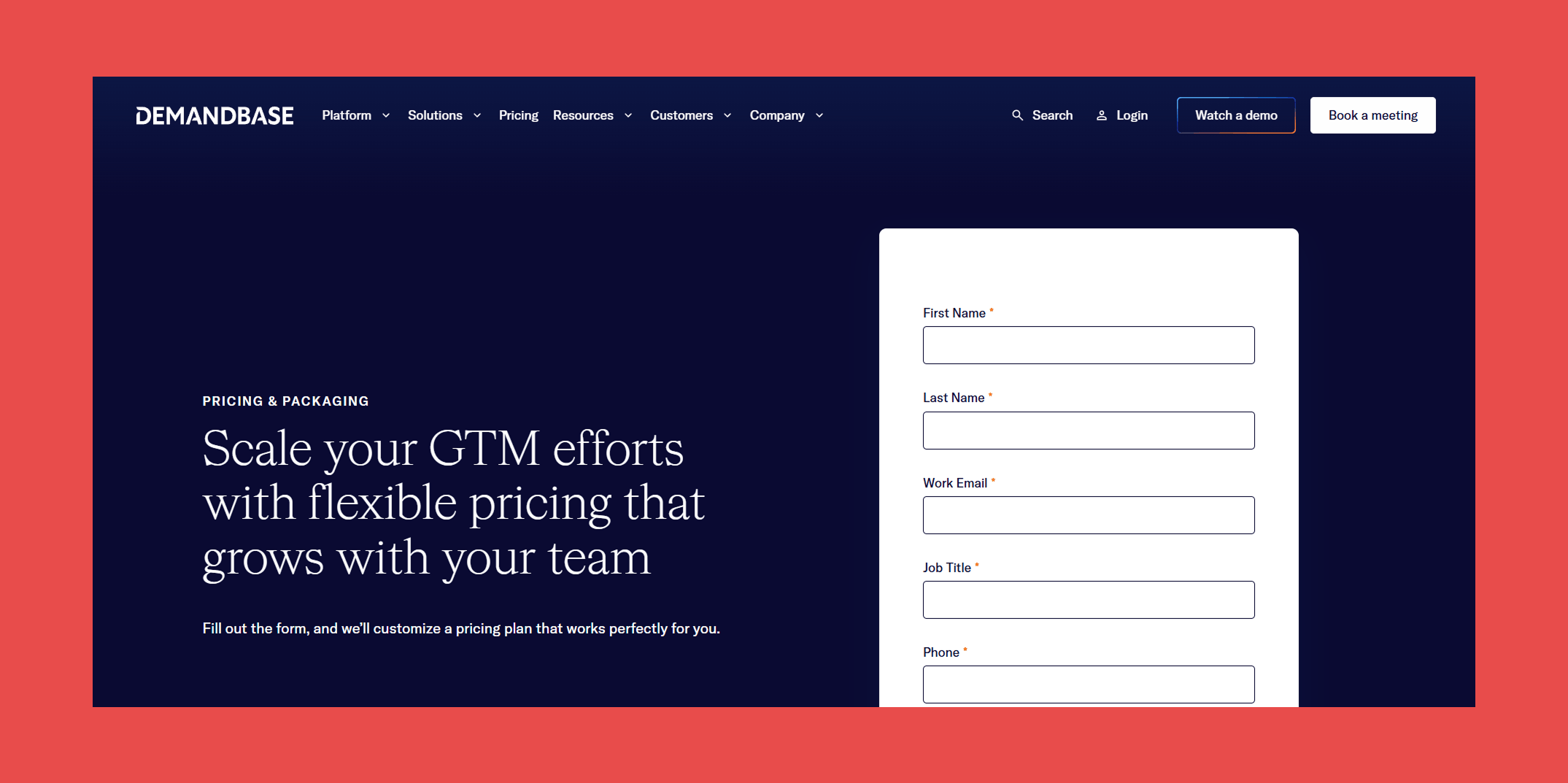
- Not publicly available. Fill out a form and contact sales to get a quote.
The Bottom Line
Most outbound teams don't have a messaging problem. They have a timing problem. Buying signals solve that by telling you not just who to target, but when to reach out and why it matters right now.
The tools in this list range from enterprise ABM platforms with six-figure price tags to accessible, outbound-first solutions built for teams who just want to move fast. The right choice depends on your team size, your budget, and how much infrastructure you're willing to build around your signal data.
Forget enterprise-level pricing and set up your monitors, define your ICP, and let Signals do the watching. You'll know the moment a prospect is worth reaching out to, and you'll have everything you need to do it.

Valentin
Valentin Wallyn is the founder and CEO of Findymail, a SaaS platform he launched to help B2B teams discover accurate email and contact data and automate data enrichment at scale. With an IT background, Valentin combines a technical mindset with hands-on experience in outreach and growth. His work centers on improving data quality and prospecting efficiency, drawing on years of entrepreneurial experience and a deep understanding of what makes outreach campaigns succeed.