AI Lead Finder
 Email Finder
 Email Verifier
 Phone Finder
 Intent Signals
 CRM Enrichment/Cleaning
 API
API

Knowing your ICP tells you who to sell to. It doesn't tell you when to call them, and that timing gap is where deals slip to whichever competitor reaches out first.
B2B intent data providers exist to catch that moment: they watch for signals that a company or person is moving toward a purchase, then hand you enough context to act while it still matters. Some do that well. Others are expensive weather reports, "this account is interested," with no way to act on it. The difference comes down to signal freshness, whether it's tied to a real person you can contact, and whether the platform feeds outbound or just a dashboard.
This guide compares seven providers on exactly that: signal quality, freshness, contact enrichment, filtering, integrations, and pricing.
Findymail Signals monitors hiring, job changes, and buying activity 24/7 and hands you the enriched contact the second a signal fires, so you're outreaching while the window is still open.
What This Guide Covers: A comparison of the ten most relevant B2B intent data providers for sales and RevOps teams, plus how to evaluate and choose between them.
The 7 Providers:
1. Findymail — from $49/month
2. 6sense — custom quote only
3. Bombora — custom, from ~$25K–$30K/year
4. Demandbase — custom quote only
5. G2 Marketing Solutions — Buyer Intent add-on, custom quote (base package from $299/month)
6. Common Room — $2,500/month billed annually
7. Informa TechTarget — custom, from ~$30K–$50K/year
Evaluation Criteria: Signal quality, freshness, coverage, data accuracy, contact enrichment, ICP filtering, integrations, pricing.
Bottom Line: The best intent data provider isn't the one with the biggest database. It's the one that turns a signal into a contact you can reach the same day, which is exactly the gap Findymail Signals was built to close.
What Is B2B Intent Data?
B2B intent data is information that suggests a company, or a specific person inside it, is actively moving toward a purchase decision. It's not a lead list. It's closer to a set of tripwires: signals that fire when someone's behavior changes in a way that correlates with buying.
How B2B Intent Data Works
It's collected from a mix of sources (content consumption, search behavior, hiring activity, website visits) and interpreted against a taxonomy of topics or events that a vendor believes correlates with purchase intent. None of it is perfect. Some of it is genuinely predictive. The trick is knowing which signals are worth building a workflow around.
First-Party vs. Third-Party Intent Data
Not all intent data comes from the same place, and the distinction matters more than most vendor pitch decks let on.
First-party intent data is generated on your own properties:
- Examples: website visits, product usage, content downloads, email engagement, demo requests
- Advantage: highly relevant, since it's directly connected to your business, someone visited your pricing page, so you know exactly what they looked at
- Limitation: you only see activity that touches your own site or product; a prospect who hasn't found you yet generates zero first-party signal
Third-party intent data happens outside your properties entirely:
- Examples: research activity on industry publisher sites, review platforms, hiring posts, funding announcements
- Advantage: can reveal potential buyers before they've ever interacted with your brand
- Limitation: signal quality and reliability vary a lot between providers, "someone at this company read an article" is a much weaker signal than "someone at this company just posted a job for a role your product replaces"
Most mature GTM motions end up combining both rather than treating them as competing options. First-party tells you who's already circling. Third-party tells you who hasn't shown up on your radar yet.
Examples of B2B Intent Data
- Website activity and content consumption
- Search behavior and research activity
- Product engagement (for existing customers or trial users)
- Hiring activity and job changes
- Funding announcements and company expansion
- Topic engagement across third-party publisher networks
Why It Matters for B2B Sales and Marketing
Intent data matters because it moves sales conversations from cold guesses to informed timing. Teams that use it well spend less effort working accounts that are nowhere near ready, and more effort on the ones already circling a decision. Which is a very different use of a rep's week.
What Are Intent Signals?
People use "intent data" and "intent signal" interchangeably, but they're not quite the same thing. Intent data is the broader category, the whole pool of information about potential buying interest. An intent signal is a specific event or behavior inside that pool: a new hire, a job change, a spike in topic research, a competitor comparison page view.
Examples of Intent Signals
- New hires and job changes
- Funding announcements and company expansion
- Product launches and technology changes
- Content and topic engagement
- Competitor research and comparison activity
- Website visits and search activity
What Makes a Signal Valuable
Not every signal deserves a Slack alert. The useful ones tend to share a few traits.
- Relevance: Does the signal actually connect to your ICP and what you sell, or is it noise that happens to be measurable?
- Recency: A signal that's accurate but three weeks stale by the time it reaches a rep is closer to historical trivia than sales intelligence.
- Specificity: "This company is interested in software" tells you almost nothing. "This company just posted a job for a RevOps lead" tells you exactly what to say.
- Context: A signal without an explanation for why it fired is hard to act on with any confidence.
- Actionability: Can a rep actually do something with it today, or does it just sit in a report? Freshness compounds here, the same job-change signal is worth a lot on day one and worth almost nothing by day thirty, once the new hire has already had five other vendors in their inbox.
Intent Data vs. Intent Signals
| Intent Data | Intent Signals | |
|---|---|---|
| Definition | Broad category of buyer-interest information | Individual indicators of interest |
| Scope | Can include multiple activities | Usually a specific event |
| Example | An account showing rising interest in CRM software | The company just posted a job for a VP of RevOps |
| Use | Identify potential buying activity | Trigger a specific action |
Intent data is the umbrella. Intent signals are the individual events underneath it. A single signal can be interesting on its own (a new hire, a hiring spike, a spike in topic research) but stacking a few together usually paints a much clearer picture than relying on any one event in isolation. A company researching CRM topics and hiring a RevOps lead in the same month is a stronger case than either signal alone.
How Sales Teams Use B2B Intent Data
This is the part that actually explains why anyone buys an intent data provider in the first place.
- Prioritize target accounts: Identify ICP accounts showing relevant buying activity, instead of working a list in alphabetical order.
- Trigger outbound campaigns: Use specific signals to determine when to reach out, rather than waiting for a rep to notice on their own.
- Personalize outreach: Use the signal as context for the sales message. "Congrats on the new VP of Sales role" lands very differently than a generic cold open.
- Find the right contacts: Connect account-level intent with relevant decision-makers, since most intent data on its own tells you nothing about who to call.
- Improve ABM: Focus marketing and sales resources on accounts showing meaningful activity, instead of spreading spend evenly across a target list.
- Identify opportunities earlier: Spot potential buyers before they explicitly raise their hand, while competitors are still waiting for an inbound form fill.
What Makes a Good B2B Intent Data Provider?
Before ranking anything, it helps to agree on the criteria used throughout this guide.
- Signal quality: Are the signals actually meaningful?
- Signal freshness: How quickly are signals detected and delivered?
- Signal coverage: What types of intent signals does the provider capture?
- Data accuracy: How reliable is the underlying data?
- Contact enrichment: Can you identify the people behind the account?
- ICP filtering: Can you isolate the signals that matter to your specific ICP?
- Integrations: Can the data feed directly into your existing workflow?
- Pricing: How is the platform priced, and does it offer enough value for the cost?
Quick Comparison: Best B2B Intent Data Providers
| Provider | Primary intent approach | Person-level data | Main limitation |
|---|---|---|---|
| Findymail Signals | Actionable external signals + enrichment | Yes | More outbound-focused |
| 6sense | Predictive account intelligence | Limited | Account-first workflow |
| Bombora | Third-party topic intent | Limited | Requires enrichment |
| Demandbase | ABM + account intent | Yes | Broader platform complexity |
| G2 Marketing Solutions | Software research activity | No | G2-only activity |
| Common Room | Digital/community signals | Yes | Best with PLG/community data |
| Informa TechTarget | Editorial content intent | Yes | Technology-focused |
7 Best B2B Intent Data Providers
1. Findymail
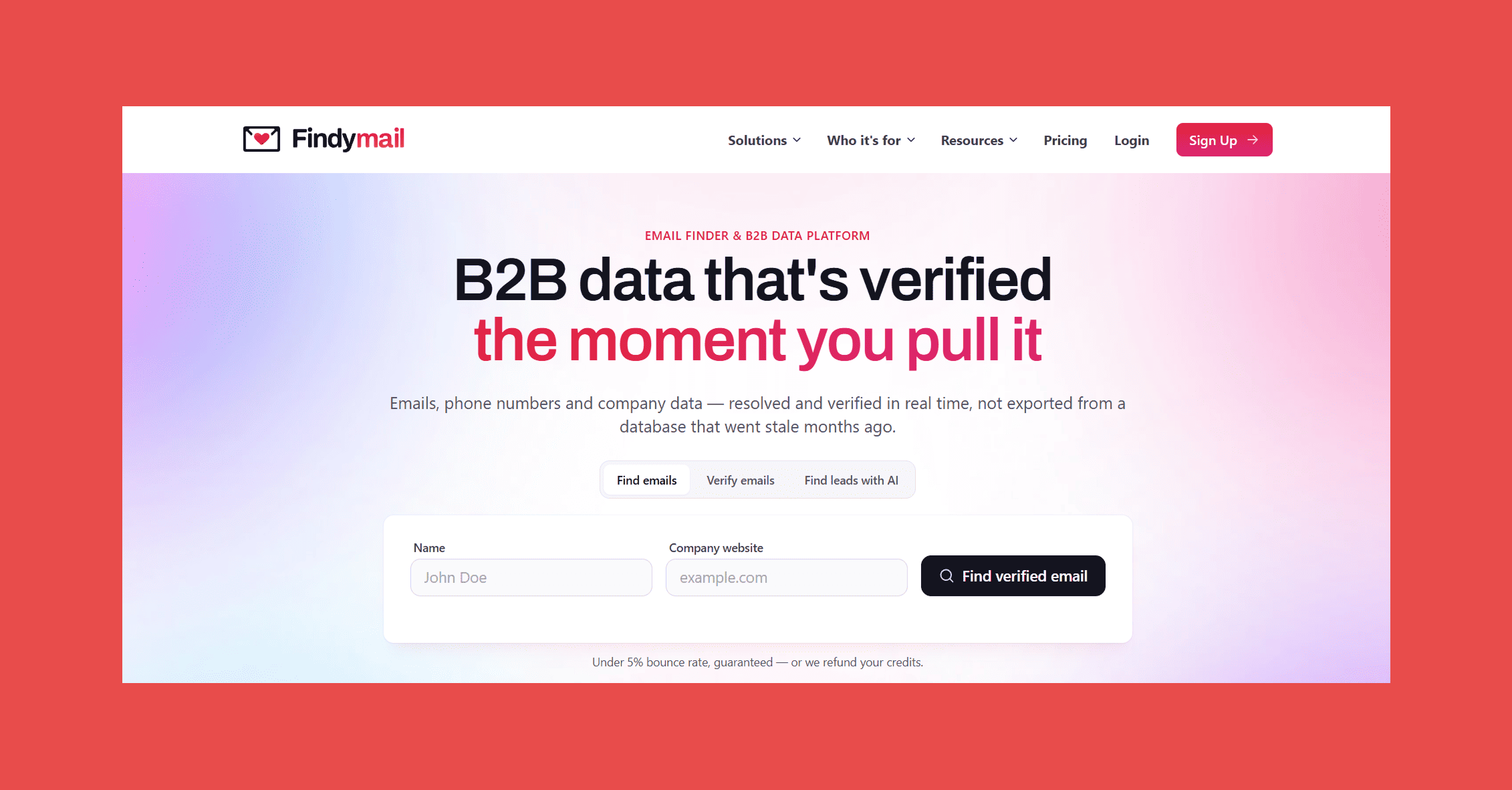
Findymail started as a no-nonsense answer to prospecting tools that only found an email and left the deliverability risk to you. Today that means an Email Finder, Phone Finder, Email Verifier, and Intellimatch (AI lead finder), all under one roof with real-time verification built in every step. Signals, the new kid on the block, was built on that same principle: sales tools should make your job easier, not lock you into a stack of point solutions that eat your time and budget. It applies that logic to timing, telling you when someone becomes worth looking for in the first place instead of just helping you find them once you already know who to look for.
Signals monitors the web for buying events (new hires, job changes, keyword mentions, topic engagement) filters them against your ICP, and enriches the result automatically. Most platforms stop at "Company X is interested." Signals finds the person, enriches the lead with company info, email, phone, and social URLs, and pushes it straight to your CRM or sequencer.
What it offers: Signals is built around actionable intent for outbound, rather than account intelligence, predictive scoring, or a standalone intent report. A signal by itself isn't the end product, the end product is a sales opportunity someone can act on. That means combining signal detection, ICP filtering, person identification, contact/company enrichment, and delivery into the sales workflow in one pass, instead of leaving those steps to separate tools.
How it works: Set up tracking in Monitors → filter to ICP → automatically enrich leads → review in Feed, land in Contacts, or push straight to your CRM or sequencer.
Data sources: Web-wide monitoring across hiring activity, company news, and content or keyword mentions, cross-referenced against your ICP filters.
Intent signal types:
- New Hire → someone joins a target account in a role you care about.
- Job Title Change → an existing contact moves into a new role internally.
- Keyword Mention → a company or contact publicly mentions a keyword you're tracking.
- Topic Engagement → a company shows engagement with a broader topic relevant to your ICP.
Each type can be filtered by industry, company size, country, job title keywords, and seniority level.
Integrations: Coexists with the rest of the Findymail prospecting platform, plus HubSpot, Salesforce, Pipedrive, Instantly, Smartlead, Lemlist, Google Sheets, Zapier, and Make.
Note: beyond the APIs for Findymail's other tools, Signals has its own dedicated API covering the full workflow: from listing and filtering signals to creating, updating, and deleting monitors.
Ratings:
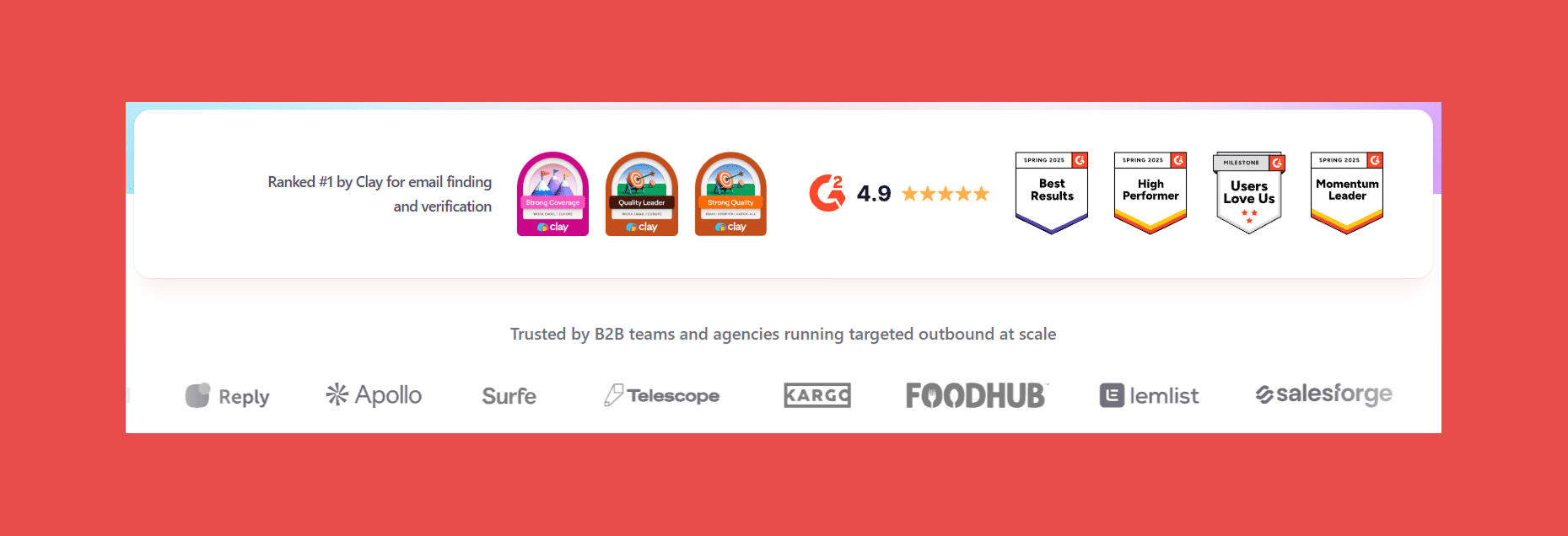
- G2: 4.9/5 (57)
- Capterra: 4.9/5 (7)
Pros:
- Signals arrive already enriched with verified contact information, not just a company name.
- ICP filtering keeps the signal feed tight instead of dumping every mention into your inbox.
- Built specifically around outbound workflows, not dashboard-watching.
- Sits inside the same platform as email and phone finding, so there's no separate tool to stitch together.
Cons:
- Signal types are more sales-outbound focused than the broad third-party topic taxonomies you'd get from a co-op like Bombora.
- Best suited to teams already running or willing to run an active outbound motion.
Pricing:
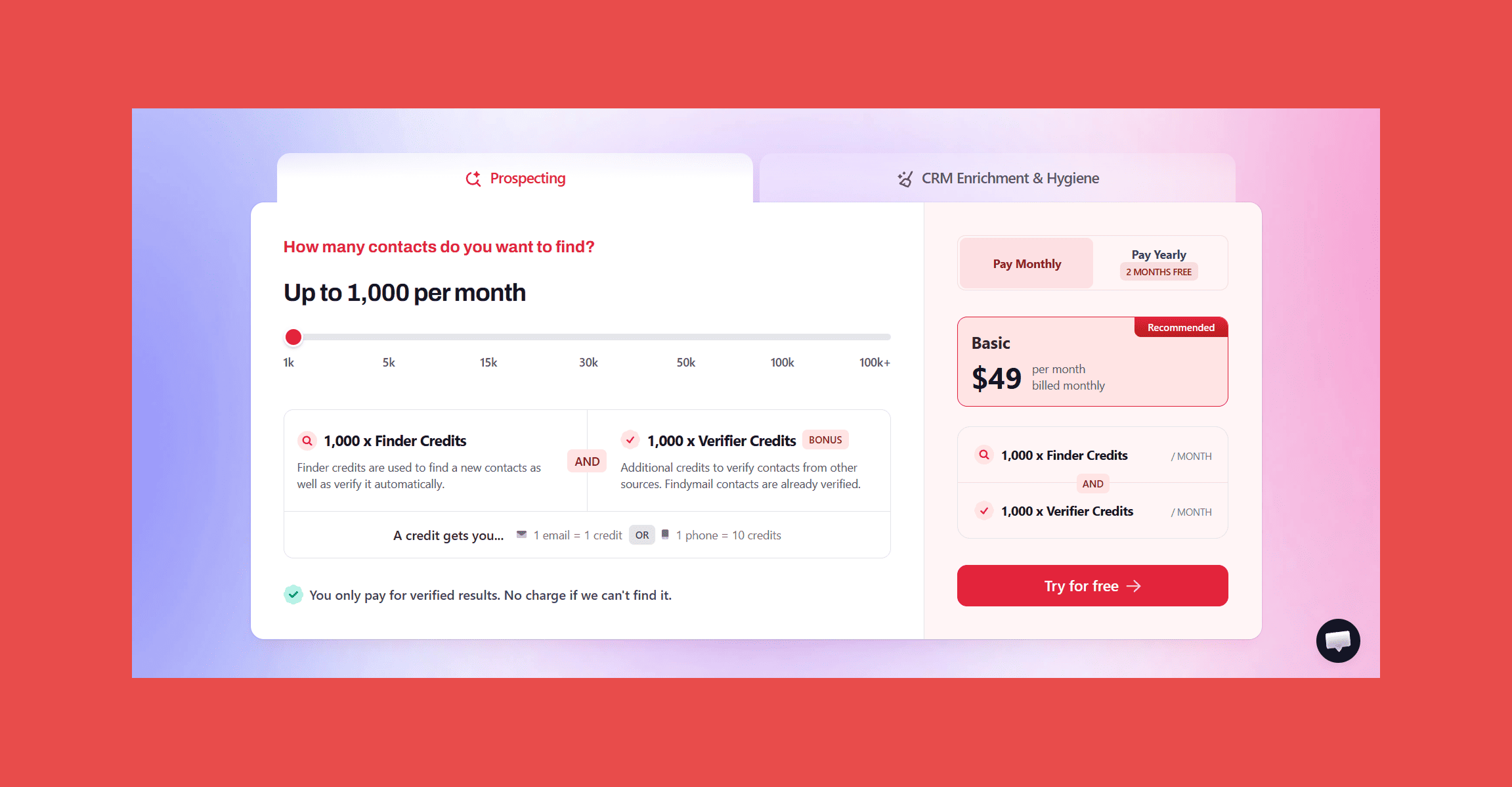
Findymail runs on a credits-based model, and every plan includes the full prospecting platform and every feature, higher tiers just mean more Finder and Verifier credits, not functionality locked behind a paywall.
- Basic: $49/month → 1,000 Finder Credits, 1,000 Verifier Credits
- Starter: $99/month → 5,000 Finder Credits, 5,000 Verifier Credits
- Business: $249/month → 15,000 Finder Credits, 15,000 Verifier Credits
- Business Plus: $399/month → 30,000 Finder Credits, 30,000 Verifier Credits
- Scale 50K: $549/month → 50,000 Finder Credits, 50,000 Verifier Credits
- Scale 100K: $849/month → 100,000 Finder Credits, 100,000 Verifier Credits
- Enterprise: custom volume pricing, with automatic refill, priority support, and a dedicated account manager
Note: Signal credit cost varies by type: 1 credit for New Hire and Job Title Change, 1–3 for Keyword Mention and Topic Engagement, plus 1 more if you add contact-level filters.
Verdict:
Signals shortens the distance between detecting an event and starting outreach, the signal arrives already attached to an enriched, contactable lead.
It's the strongest fit for teams that want signals to turn into people they can contact, not another dashboard. It's not trying to replace an enterprise ABM platform, so teams that need advertising orchestration or predictive account scoring may be better served elsewhere on this list.
Once a job change or new hire fires, every day you spend manually researching the contact is a day a competitor spends emailing them instead. Signals skips the research step entirely.
2. 6sense
6sense predicts which accounts are already in-market, combining proprietary intent data (Signalverse) with third-party sources, then scoring accounts across defined buying stages using AI. It also maps the buying committee behind an account rather than a single contact, and can orchestrate outreach across advertising and sales channels once a signal fires.
It's positioned around account-level prediction, which is part of why it commonly appears on enterprise ABM shortlists.
What it offers: 6sense is an account intelligence and predictive ABM platform. Rather than surfacing individual intent events, it tries to tell you which accounts are likely entering a buying cycle in the first place. That's a conceptually different starting point than a tool built around discrete, per-event signals.
How it works: A 6QA (6sense Qualified Account) classification fires when profile fit, buying stage, intent, and engagement all cross set thresholds together, as an alternative to single-signal MQL scoring. Intelligent Workflows can then trigger actions automatically (a sales alert, a sequence enrollment, an ad launch or suppression) when an account changes stage.
Data sources: Its own web network (Signalverse) tracking B2B research activity, third-party partners like Bombora, G2, TrustRadius, PeerSpot, and Gartner, plus first-party CRM and website data and anonymous visitor matching for existing customers, layered with firmographic and technographic data.
Worth noting: account data refreshes monthly, while intent signals refresh daily.
Intent signal types:
- Keyword-level and topic-level third-party research activity
- First-party signals (anonymous and identified website visits, CRM/MAP engagement, ad engagement, form fills)
- Firmographic and technographic changes, hiring trends, funding events, and buying-group job changes
- A predictive buying-stage classification (Target, Awareness, Consideration, Decision) built from all of the above
Integrations: Major CRMs, marketing automation platforms, sales engagement tools, and native advertising orchestration across the big ad networks, with API access for custom configurations.
Ratings:

- G2: 4.5/5 (2,546)
- Capterra: 4.6/5 (30)
Pros:
- Strong predictive scoring backed by analyst recognition.
- Broad multi-source intent aggregation.
- Native advertising orchestration reduces the need for a separate DSP.
Cons:
- Pricing is entirely custom and unpublished.
- Requires dedicated RevOps resourcing to configure and maintain.
- Implementation and onboarding commonly take several months, so you're financially committed well before you can tell whether it's actually working.
- Person-level contact data is a weaker point than account-level intelligence.
- Steep floor for smaller teams.
Pricing:
- Nothing is published anywhere; you'll need to talk to sales to get an actual number
- Cost scales with how many modules and accounts you're covering, so a basic package and a full enterprise rollout aren't remotely comparable
Verdict: 6sense can help prioritize which accounts deserve attention, but an SDR looking for an immediately contactable prospect may still have research left to do — turning an account-level signal into an actionable contact is a separate step. That makes it a better fit for organizations that need an enterprise ABM and predictive intelligence layer than for teams primarily looking for fresh signals they can immediately turn into outbound opportunities.
3. Bombora
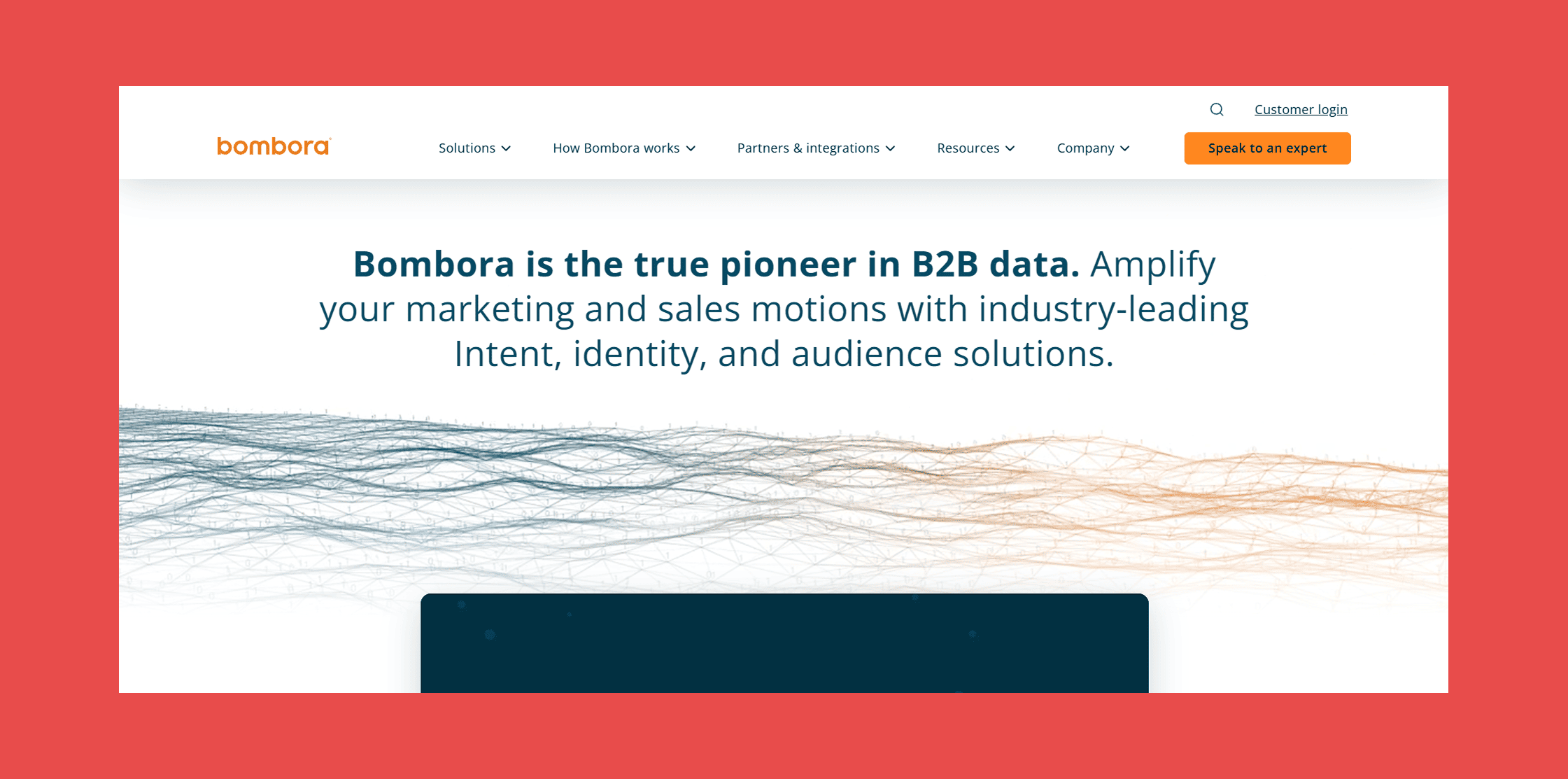
Bombora is one of the earliest and most widely licensed third-party intent data sources (and it's the co-op underlying several other platforms on this list). Its Company Surge® feature uses machine learning and natural language processing to track company research activity against more than 21,600 topics, then flags elevated intent when a company's activity on a given topic over the past three weeks stands out against its own 12-week baseline. Bombora says most of that co-op data is shared with it exclusively.
What it offers: Bombora is a dedicated third-party topic-intent data source. It answers a specific question (which companies are researching this topic more than usual) rather than who your rep should contact about it right now.
How it works: Visitor Insights for website traffic enrichment, a B2B Identity Graph for account matching, and B2B personas, which break topic-surge activity down by functional group (IT, HR, Finance, Operations, Marketing, Legal, or the executive team) rather than leaving it as one undifferentiated account-level signal.
Data sources: A consent-based data cooperative of thousands of publisher and B2B media sites plus premium data providers, tracking billions of monthly content consumption events via a proprietary, consent-driven tag across millions of B2B domains and a broad topic taxonomy. Bombora says most of this data is exclusive to its co-op.
Intent signal types:
- Company-level topic surge scores, built from engagement depth signals like time on page and scroll depth, not just page views
- Audience segments that combine firmographic data (industry, size, revenue, geography), demographic data (job function, seniority, department), and intent data into one addressable audience
Integrations: Major CRMs natively, plus licensing as an underlying data layer inside a number of other platforms on this list.
Ratings:
- G2: 4.5/5 (163)
- Capterra: 4.5/5 (2)
Pros:
- One of the longest-standing third-party topic intent providers in the category.
- Broad publisher network gives coverage outside your own niche.
Cons:
- Company Surge topic intent stays account and functional-group level — named-person identification is limited to Visitor Insights, and only for traffic that actually hits your own website.
- Verified contact details like email and phone aren't included and require a separate enrichment tool.
- No built-in sequencing or dialer. intent data has to be routed into whatever engagement stack you already run.
- Implementation typically takes a few months to get running, so there's a real ramp-up period before the data starts delivering value.
Pricing:
- Not publicly listed; third-party reports suggest a median contract value somewhere around $25,000/year, though larger deployments with expanded topic coverage can run well past that.
- No self-serve free tier; the entire process is led by a Bombora specialist rather than a self-guided sign-up.
Verdict: Bombora can tell you that an account's research activity around a topic has increased, but sales teams still need another tool to identify the right person and enrich their contact details before outreach. That makes it a strong choice when the priority is adding third-party topic intent to an existing GTM stack, and less compelling for teams looking for a complete signal-to-contact outbound workflow in one place.
4. Demandbase
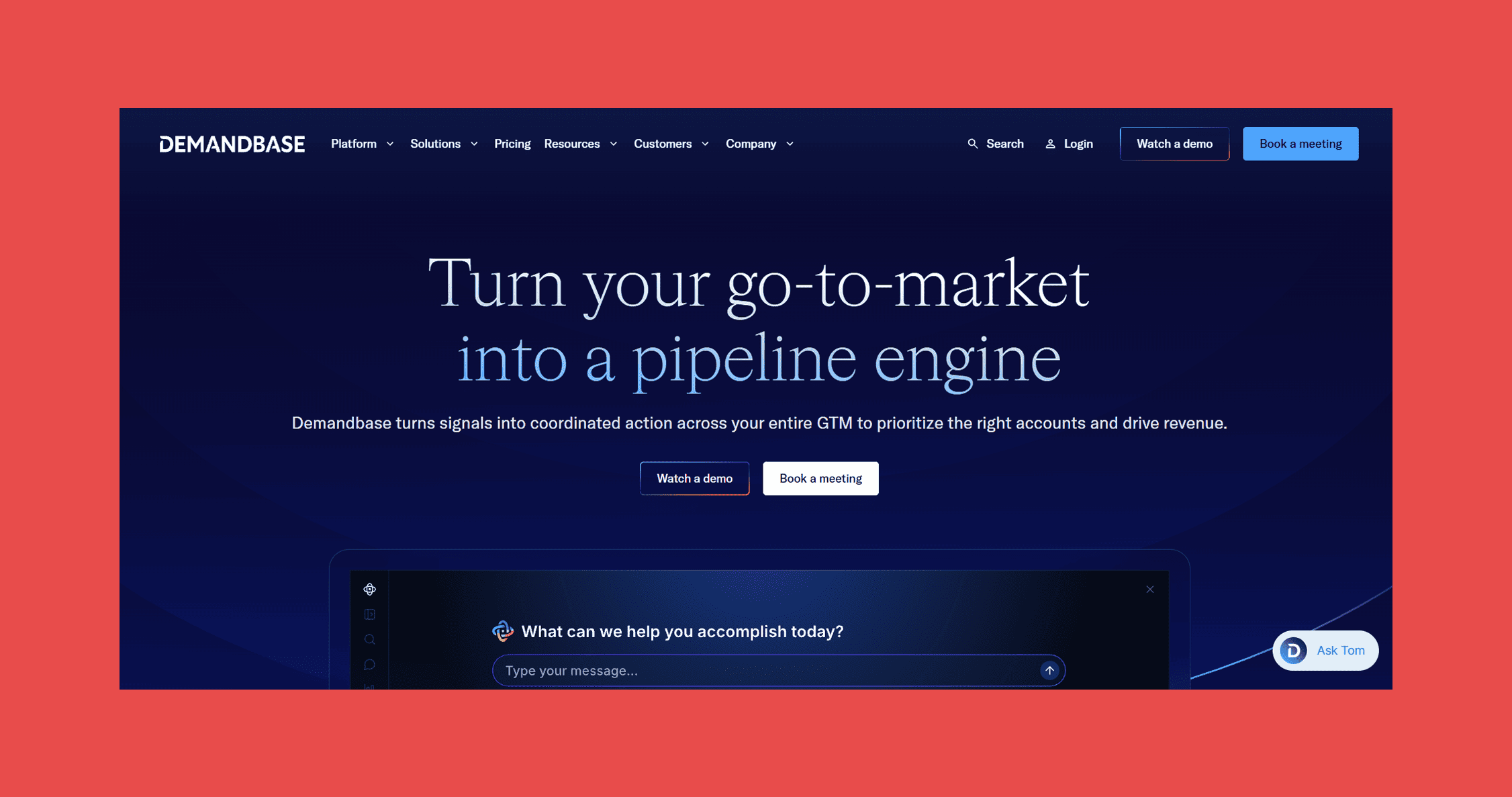
Demandbase positions itself as an account-based go-to-market platform rather than just an intent data vendor. Its flagship suite, Demandbase One, combines ABM, intent, and a native advertising DSP for sales and marketing teams. Though Demandbase also sells its Advertising and Data products as standalone options for teams that just want the underlying data and insights without the full platform.
What it offers: Demandbase's Data product unifies firmographic, technographic, buyer, and intent data into a single account view, then layers on continuous enrichment (job moves, tech changes, intent spikes) and activation across CRM, marketing, advertising, and sales tools. Intent here is one component of a broader account-based GTM system, not a standalone product built around signal detection.
How it works: Person-Based Intent matches keyword-level intent to known contacts inside an account and ranks them by how central they are to the buying group, rather than stopping at the account level. A separate buying-group tool can also auto-build the full buying committee for an account and fill in missing roles from Demandbase's own contact database.
Data sources: Signals come directly from the bidstream via Demandbase's own DSP, giving it visibility into B2B publisher traffic without relying entirely on licensed third-party data the way some other vendors on this list do. That's layered with proprietary interaction data captured across web, content, and webinar activity, plus anonymous website visitor identification matched to known accounts.
Intent signal types:
- Proprietary bidstream intent, captured directly through Demandbase's own B2B advertising DSP rather than resold from another provider
- Third-party intent imported from providers like Bombora, G2, and TrustRadius, folded into the same account view
Integrations: Major CRMs, marketing automation platforms, and ad networks, alongside Demandbase's own advertising DSP, flexible APIs, and warehouse-native delivery for syncing data across the rest of the stack.
Ratings:

- G2: 4.4/5 (1,987)
- Capterra: 4.3/5 (17)
Pros:
- Captures intent directly via its own bidstream/DSP access rather than only reselling licensed third-party data.
- Person-Based Intent names specific contacts behind a signal, not just the account.
- Buying-committee mapping goes beyond single-contact intent.
Cons:
- Full platform pricing bundles Sales and Marketing together rather than offering them as separate, cheaper standalone solutions.
- No published pricing, and quotes scale with account volume and user count.
- Considerable setup complexity for smaller marketing teams.
Pricing:
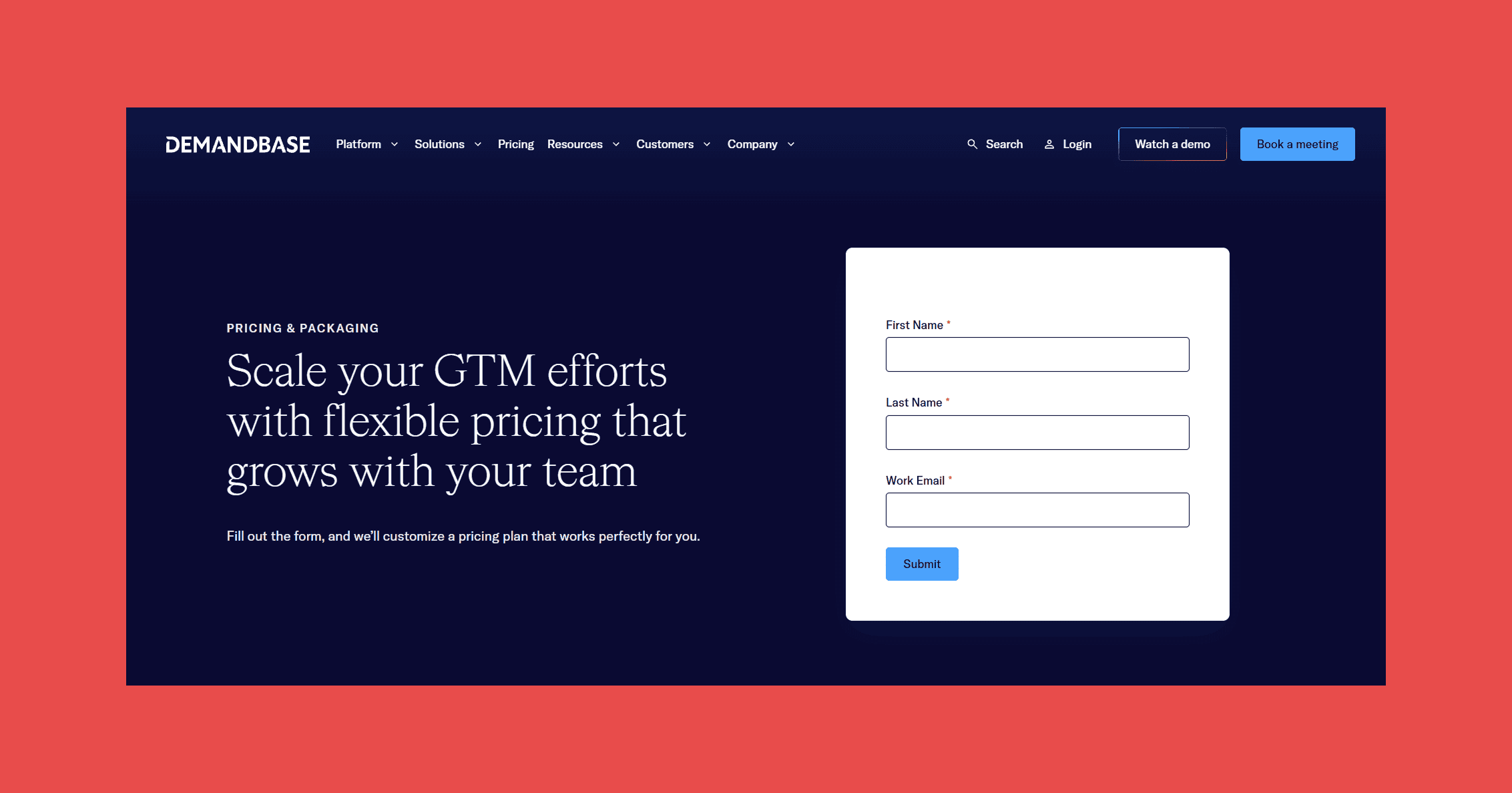
- Nothing is published; you'll need to contact their sales team for a quote
- Tiers scale by capability, the entry-level plan doesn't even include third-party intent, so it's worth confirming that's covered before you get too far into a conversation
Verdict: For teams primarily interested in sales prospecting, Demandbase's broader ABM and advertising functionality can add complexity without necessarily improving the basic signal-to-contact workflow. It makes the most sense when intent is part of a broader ABM strategy — if the goal is simply to identify fresh buying signals and get them in front of reps, a more focused prospecting workflow may be easier to operationalize.
5. G2 Marketing Solutions
Most people know G2 as the review site software buyers check before talking to a sales rep. The other side of G2 is Marketing Solutions, the paid tier structure vendors buy into for visibility on that marketplace. Buyer Intent is the add-on within it, turning activity like page views, competitor comparisons, pricing engagement, and reviews into a signal feed captured directly rather than modeled. The tradeoff is coverage: it only sees what happens on G2, so it's only as useful as how much your buyers actually shop there.
What it offers: Signals are sent at the product level, so a company with multiple G2-listed products needs a separate Buyer Intent subscription for each one. Intent Studio (beta) lets you define your ICP and route matching signals to selected integrations automatically.
Worth noting: each account also gets a Buying Stage and Activity Level score.
Data sources: First-party behavioral data captured directly on the G2 marketplace, plus proprietary crawling technology that checks publicly available indicators of product usage. G2 says this data is collected at the organization level only, with no personally identifiable data stored, which is also why it doesn't identify individual buyers by name.
- Intent signal types: Profile, Pricing, Alternatives, Category, Compare, Sponsored Content, Licensed Content, Reference Page, and Competitive page views. Nine in total
Integrations: Major CRMs, marketing automation platforms, and ABM platforms.
Ratings:

- G2: 4.6/5 (5,872)
- Capterra: 4/5 (9)
Pros:
- Signals reflect direct research actions like page views and comparisons, rather than an inferred pattern.
- Includes competitor comparison page data, which most other providers on this list don't track.
Cons:
- Limited to G2 platform activity only, no visibility into research happening elsewhere.
- Account-level, not person-level.
- Requires an existing paid G2 Marketing Solutions package before you can even add it on.
- No published pricing and no self-serve trial for the add-on itself.
Pricing:
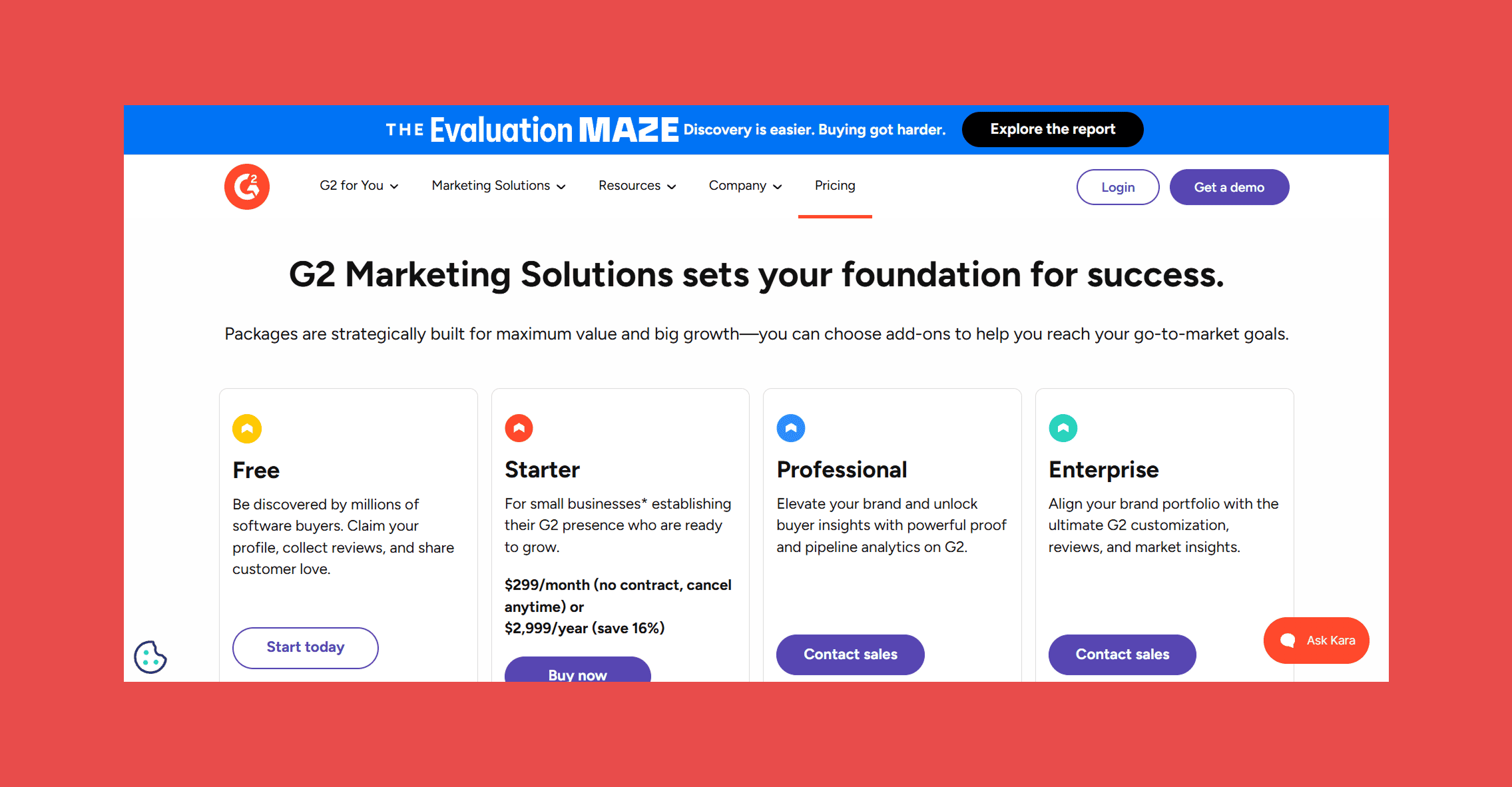
- Free (claim your profile, collect reviews)
- Starter: $299/month or $2,999/year (the only self-serve tier; adds custom CTAs and review collection tools)
- Professional: contact sales (adds review management and profile visitor data)
- Enterprise: contact sales (adds unlimited users and market intelligence)
Verdict: A prospect can be actively researching a category without ever visiting G2, so this activity represents one slice of the buyer journey rather than a complete picture of intent. The Buyer Intent add-on is useful as a specialist source of software research intent when your buyers actively use G2, but less suitable as a standalone source of broader intent signals.
6. Common Room
Unlike most tools on this list, Common Room isn't trying to be a data source first. It's trying to be the hub where all your existing data sources finally talk to each other. Product usage, CRM records, and community activity all funnel into one profile per contact. It grew out of community-led growth tracking, which is why the signal set leans toward developer forums, GitHub, and community platforms rather than the usual web/content intent.
What it offers: Common Room does track some signals natively (job changes, job listings, news, dark funnel), and it comes stocked with its own data enrichment and AI agents that can act on that data. But its bigger value is aggregating and unifying signals from tools you already use into one profile, identity resolution and consolidation more than net-new data acquisition.
How it works: Person360 merges a person's signals from every connected source into one Contact profile, feeding enrichment and lead scoring. RoomieAI Spark then turns that into real-time Slack or email alerts telling a rep who to engage and why.
Data sources: Common Room covers its native signals in a few different ways. Some sourced directly from LinkedIn, others from third-party databases or its own enrichment engine.
- Job changes → sourced from LinkedIn
- Job listings → a database of 150M+ listings across 40M+ companies
- News and events → drawn from 8M+ public news articles
- Technographics → enriched from third-party sources that detect an organization's tech stack
- Default contact/org attributes → assembled from Common Room's own enrichment engine plus whatever sources you've connected
- Prospector → a database of 400M+ B2B profiles sourced from LinkedIn and supplemented by other data providers
- Chrome Extension → manual, on-demand pulls from LinkedIn or your CRM
Intent signal types:
- Native: job changes, job listings, news and events, technographics, default contact/org attributes, and dark funnel
- Integration-dependent: website tracking, product usage, community and social platforms, and business data
Integrations: CRM sync with major platforms, Slack and email alerting, and data warehouse integrations, though not all of these are available on every plan; some are gated to higher tiers. The integration marketplace is broad enough to cover most of what you'd need, and it goes beyond the usual sales stack: you can also connect community platforms like Discord and Reddit.
Ratings

- G2: 4.5/5 (114)
- Capterra: N/A
Pros
- Genuinely broad signal sources beyond the usual web/content intent.
- Strong fit for PLG or developer-facing companies.
Cons
- Less valuable if you don't already have several data sources worth consolidating — the core pitch is unification, so a lean tool stack limits the upside.
- Pricing scales quickly with contact volume and signal sources added on top of the base plan.
- Less useful for traditional outbound teams without a community or PLG motion.
Pricing:
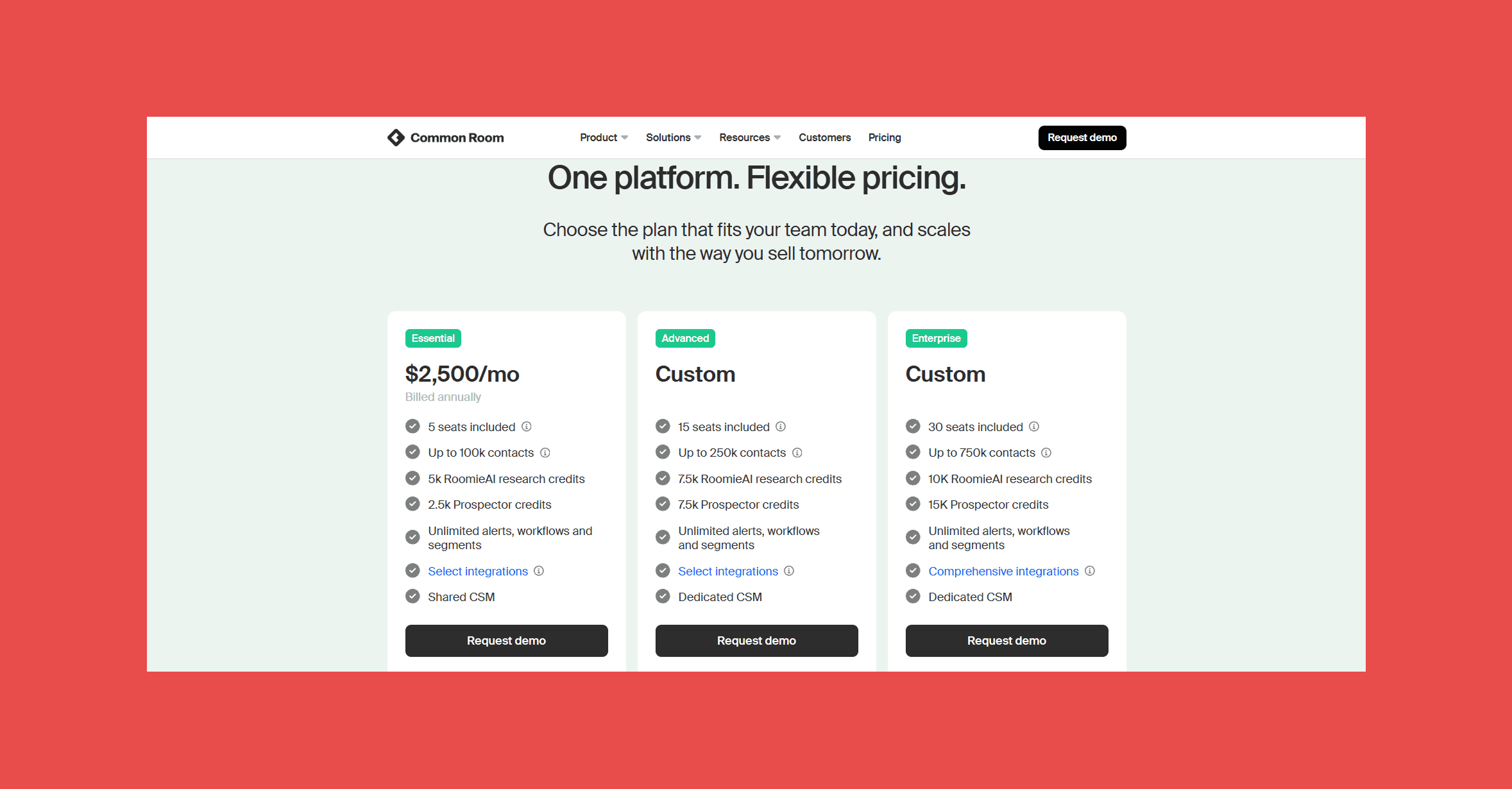
- Essential: $2,500/month billed annually → 5 seats, up to 100,000 contacts, 5,000 RoomieAI research credits, 2,500 Prospector credits, select integrations, shared CSM
- Advanced: custom quote → 15 seats, up to 250,000 contacts, 7,500 RoomieAI research credits, 7,500 Prospector credits, select integrations, dedicated CSM
- Enterprise: custom quote → 30 seats, up to 750,000 contacts, 10,000 RoomieAI research credits, 15,000 Prospector credits, comprehensive integrations, dedicated CSM
Verdict: Common Room's breadth is most useful when your buyers are active in communities, developer platforms, or product-led environments. Teams whose prospects don't leave those kinds of digital footprints may get less value from the additional signal sources. It's differentiated by that breadth, but isn't a direct substitute for traditional B2B topic intent or outbound-focused signal detection.
7. Informa TechTarget
Following its merger with Informa Tech, TechTarget's Priority Engine draws on more than 150 owned technology publications to generate contact-level intent from opt-in editorial behavior. That contact-level piece is the real differentiator versus most of this list. TechTarget names the individual doing the research, not just the account, because its audience has already opted in through registration on its properties.
What it offers: TechTarget's core offering is contact-level intent from people consuming technology content across its publishing network. A named person doing the research, not just an account showing activity.
How it works: Priority Engine ranks accounts and contacts by research intensity, topic fit, and competitive engagement, including whether a prospect touched competitor-related content within the network. From there it can push intent directly into your CRM, though that's a basic hand-off rather than built-in workflow automation or outbound execution.
Data sources: First-party editorial behavior across 150+ owned technology publications with a permissioned, opted-in B2B audience. TechTarge is reportedly tracking 1.4 million+ intent signals from 32 million+ opted-in B2B professionals. Because the signal comes directly from what someone reads on TechTarget's own properties, it isn't inferred from IP-based web tracking the way many account-level signals on this list are.
Intent signal types:
- Contact-level editorial topic research
- Competitive intelligence: which topics, technologies, and vendors a prospect researched, including competitor-related content within the network
Integrations: Major CRMs and sales engagement platforms, delivered via portal, CRM integration, or data export.
Ratings
- G2: 4.3/5 (453)
- Capterra: N/A
Pros
- One of the few providers on this list offering contact-level rather than account-level intent.
- Signals come from an opted-in audience, rather than anonymous web tracking.
Cons
- Coverage skews heavily toward technology buyers, and even within tech, signal depth varies by topic, geography, and role. Worth requesting a coverage check against your actual ICP rather than assuming uniform depth.
- User feedback on contact accuracy is mixed. Some reviewers report inconsistent contact details, so it's worth testing against your own target accounts before committing.
- No workflow automation, outbound execution, or AI-assisted prospect research built in. CRM enrichment is a basic push of intent data, not deep multi-provider enrichment.
Pricing:
- No published pricing; entry-level access is typically quoted around $30,000–$50,000/year, scaling to $100,000+ for larger account universes and multiple topic categories.
Verdict: Even though TechTarget provides contact-level intent, the sales team still needs to take that signal and execute the outreach workflow, and its usefulness depends heavily on whether your ICP overlaps with its technology-focused audience. It's one of the more interesting options when contact-level research intent from technology buyers is the priority, but its specialized approach may be less flexible for broader ICPs or intent that spans multiple signal types.
How to Choose an Intent Data Provider
Now that you've seen the options, here's a framework for actually deciding between them.
Start with your use case:
- Outbound prospecting
- ABM
- Demand generation
- Lead scoring
- Sales prioritization
A platform built for enterprise ABM orchestration isn't necessarily the right fit for a five-person SDR team, and vice versa.
Identify the signals you need:
- Research activity
- Website activity
- Hiring
- Job changes
- Content engagement
- Company events
- Technology changes
Pick the ones that map to how your buyers actually behave before comparing vendors on price.
Decide what level of data you need:
- Account-level
- Person-level
- Both
Account-level intent tells you a company is interested. Person-level intent tells you who to call. Several vendors on this list only do the former, which means budgeting separately for enrichment.
Evaluate freshness and accuracy: A platform with excellent topic coverage and a two-week delivery lag is only marginally more useful than no signal at all. Ask vendors directly how fast a real-world event becomes an alert in your inbox.
Check integrations: Figure out where the data needs to land (CRM, sequencer, Slack, a data warehouse) before signing anything. A platform with excellent signals and no usable integration just becomes a second dashboard nobody checks.
Compare pricing: Some vendors charge by seat, some by contact volume, some by credits, some by signal type. A $30,000 platform with everything bundled can end up cheaper than a $15,000 one that needs three add-ons to actually be usable.
Consider how actionable the data is: The real test isn't whether a platform detects a signal — most of them do, eventually. It's whether a rep can pick it up and act on it the same day, with enough context to make the outreach feel relevant rather than random.
The right intent data provider isn't necessarily the one with the most signals. It's the one that provides the right signals, at the right time, with enough context for your team to act.
Final Thoughts
The best intent data provider isn't necessarily the one with the largest database or the most signals. It's the one that gives your team relevant, fresh signals with enough context to turn them into action.
- B2B intent data helps identify potential buying activity.
- Intent signals are the individual events that reveal that activity.
- Different providers specialize in different types of signals.
- The right provider depends on your use case, data requirements, and workflow.
- For outbound teams, actionability matters just as much as the underlying intent data.
Findymail Signals monitors your ICP around the clock and delivers enriched, verified contacts the instant a buying signal fires, so your outreach lands while it still matters.
FAQ About B2B Intent Data Providers
What are intent data providers?
Intent data providers are platforms that collect and interpret behavioral, firmographic, and third-party signals to identify companies or individuals showing buying interest, then surface that activity to sales and marketing teams.
What is B2B intent data?
B2B intent data is information suggesting that a company or person is actively researching or moving toward a purchase decision, gathered from sources like content consumption, website activity, hiring, and search behavior.
What are B2B intent data providers?
Vendors that specialize in collecting, scoring, and delivering intent signals to sales and marketing teams. Ranging from third-party topic-intent co-ops like Bombora to full ABM platforms like 6sense and Demandbase.
What are intent signals?
Specific, individual events or behaviors that indicate buying interest, such as a job change, a new hire, a spike in topic research, or a competitor comparison page view.
How does B2B intent data work?
Providers monitor a mix of first-party and third-party sources for behavior patterns, apply scoring models or topic taxonomies to interpret that activity, then route the resulting signals to a CRM, sequencer, or dashboard.
What are examples of intent signals?
New hires, job title changes, funding announcements, technology changes, content engagement, website visits, and competitor research activity.
What is the difference between intent data and intent signals?
Intent data is the broad category of buyer-interest information; an intent signal is a specific, individual event within that category.
Is B2B intent data accurate?
Accuracy varies significantly by provider and signal type. First-party signals (your own website, product usage) tend to be more reliable than third-party topic-modeled signals, which can vary in precision depending on data source density in your specific vertical.
Is intent data worth it?
It depends heavily on whether the platform connects signals to a workflow your team will actually use. Intent data without person-level enrichment or CRM integration often ends up as an expensive dashboard rather than a driver of pipeline.
How do sales teams use intent data?
To prioritize accounts, trigger and personalize outbound campaigns, identify the right contacts within a signaling account, and catch buying opportunities earlier in the cycle.
What is the best intent data provider?
It depends on the use case. Enterprise ABM teams tend toward 6sense or Demandbase; teams that want intent signals converted directly into contactable, enriched leads for outbound tend toward Findymail Signals.

Valentin
Valentin Wallyn is the founder and CEO of Findymail, a SaaS platform he launched to help B2B teams discover accurate email and contact data and automate data enrichment at scale. With an IT background, Valentin combines a technical mindset with hands-on experience in outreach and growth. His work centers on improving data quality and prospecting efficiency, drawing on years of entrepreneurial experience and a deep understanding of what makes outreach campaigns succeed.