AI Lead Finder
 Email Finder
 Email Verifier
 Phone Finder
 Intent Signals
 CRM Enrichment/Cleaning
 API
API

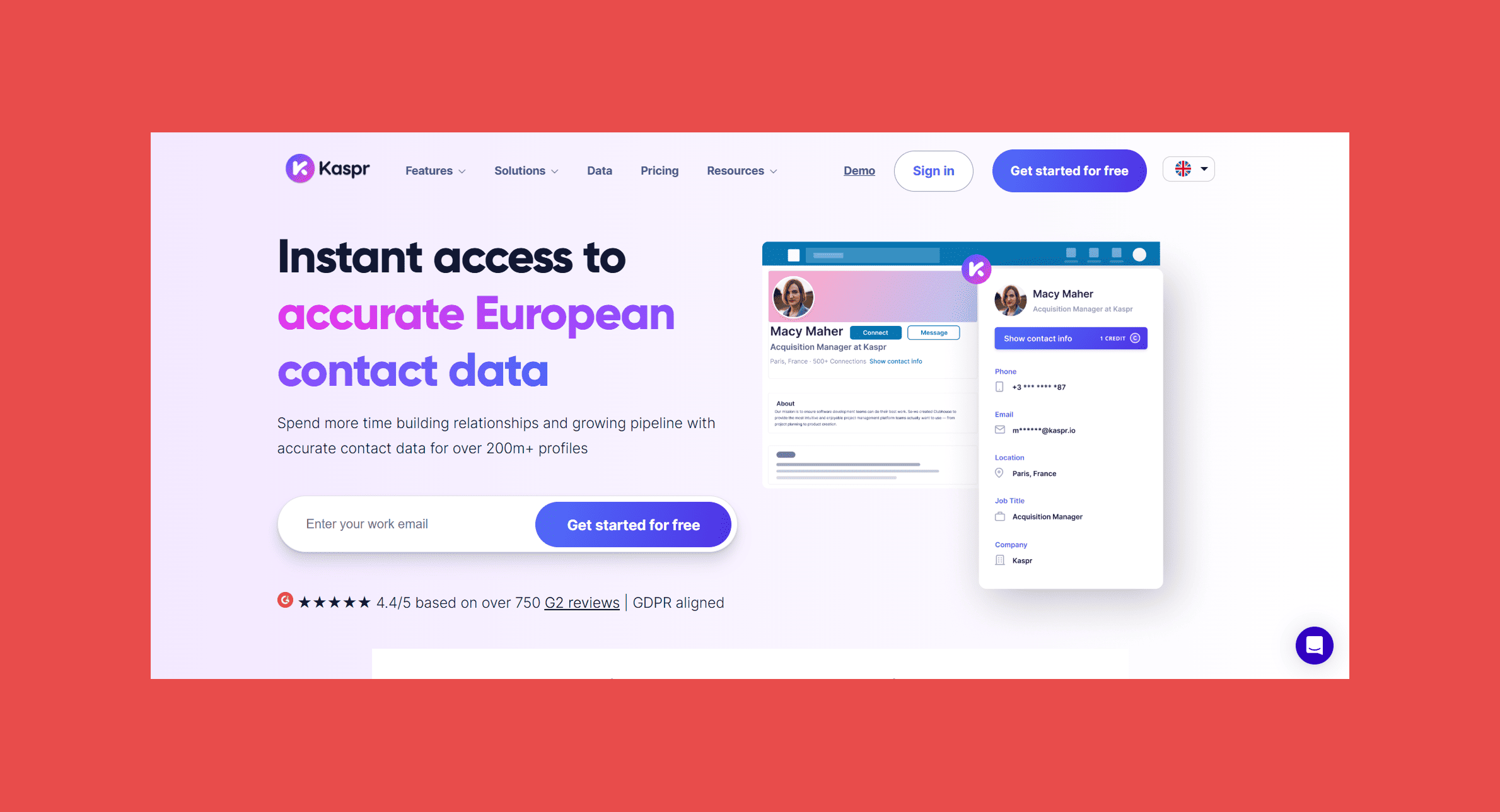
Kaspr built its following on a simple trick: open a LinkedIn profile, click the extension, and a phone number and email address appear without you ever leaving the tab. For SDRs and recruiters who already spend half their day on LinkedIn, that turns contact hunting from a research project into a click.
If you're reading this, Kaspr is probably already on your shortlist (or already sitting in your browser toolbar), and you want to see what else is out there before you commit or renew. Fair enough. Contact data tools are easy to sign up for and surprisingly hard to compare, because each one tackles a slightly different slice of prospecting.
Findymail finds and verifies every email in real time, catch-all addresses included, so your sequencer only gets contacts that hold up. The result is a bounce rate under 5%.
What This Guide Covers: What Kaspr does, what it costs, where it fits and where it doesn't, plus seven alternatives for teams that need broader discovery, verified data or more automation.
The 7 Alternatives:
1. Findymail – Verified email and phone finding, AI lead discovery and intent signals
2. Cognism – Enterprise sales intelligence with phone-verified mobiles
3. Lusha – Contact discovery and enrichment with a searchable database
4. Waalaxy – LinkedIn prospecting and outreach automation
5. Apollo – B2B database plus sequencing in one platform
6. Hunter – Email finding and verification
7. RocketReach – Contact lookup across a large B2B database
Bottom Line: Kaspr is hard to beat for grabbing contact details off a LinkedIn profile. If you need to find prospects beyond LinkedIn and know every email will land, Findymail is built for that.
What Is Kaspr?
What does Kaspr do?
Kaspr is a B2B contact enrichment tool built around LinkedIn prospecting, and it's part of the Cognism family. The two share information between their datasets but aim at different buyers: Kaspr is the self-serve option for individual reps, recruiters and founders, while Cognism sells to enterprise revenue teams and keeps premium data such as phone-verified mobiles and intent data for its own platform.
The extension is the headline act, but it isn't the whole show. Kaspr can bulk-enrich people from LinkedIn searches, groups and events, enrich a CSV of LinkedIn URLs, and store everything in a lead dashboard with notes, tags, tasks and lists. From there, contacts export to a CRM, a sales engagement tool or a dialer.
Most Kaspr users fall into two camps: salespeople filling a pipeline and recruiters sourcing candidates, with founders running their own outbound close behind. What they share is a workflow that already runs through LinkedIn.
How does Kaspr work?
Everything starts on a prospect's LinkedIn profile. Open the extension, hit Reveal contact details, and whatever emails and phone numbers Kaspr has appear, each reveal spending a credit.
Revealed contacts save to a list in your Kaspr dashboard, where they can be exported to a spreadsheet or CRM. For larger lists, bulk automations pull contacts from LinkedIn searches, posts, groups or events.
In an outbound stack, Kaspr sits between discovery and outreach. It doesn't send emails or run sequences; it hands contacts to the tools that do.
Who is Kaspr for?
Kaspr makes the most sense when LinkedIn is already the center of the prospecting process:
- SDRs and BDRs who build lists in LinkedIn or Sales Navigator and want contact details without a separate lookup tool
- Recruiters working in LinkedIn and Recruiter Lite
- Lead generation agencies and founders enriching LinkedIn-sourced prospects at modest volume
- Sales teams that want contacts pushed straight to a CRM or dialer after the reveal
How much does Kaspr cost?
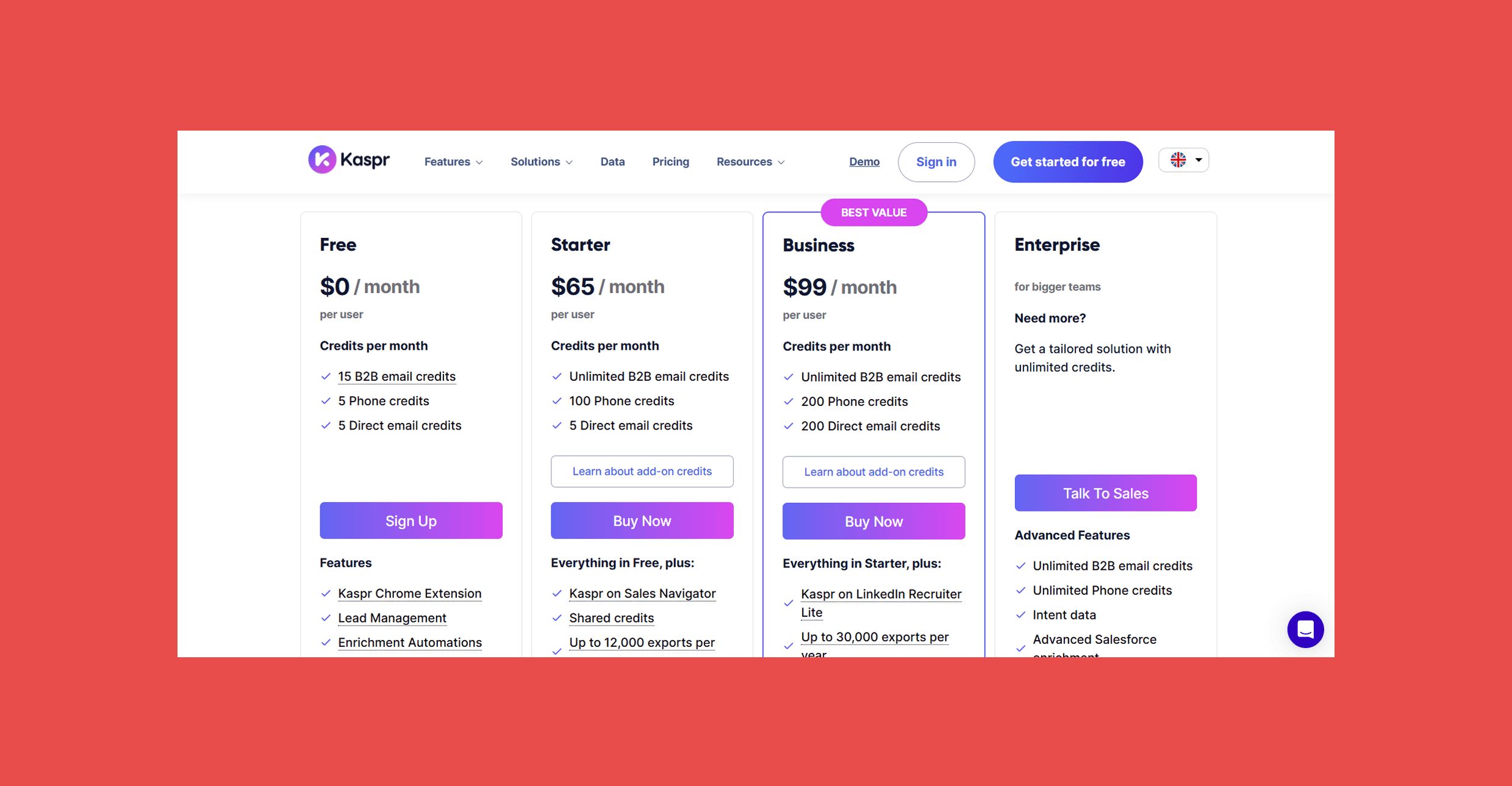
Kaspr prices per user, and each plan draws on separate pools: B2B email credits, direct email credits, phone credits and an export allowance.
- Free: $0/month, with 15 B2B email credits, 5 phone credits and 5 direct email credits per month
- Starter: $65/user/month, with unlimited B2B email credits (subject to fair use), 100 phone credits and 5 direct email credits per month, and up to 12,000 exports a year
- Business: $99/user/month, with unlimited B2B email credits, 200 phone credits and 200 direct email credits per month, and up to 30,000 exports a year
- Enterprise: custom, with unlimited credits, intent data, advanced Salesforce enrichment and SSO
Kaspr Review: Features, Strengths & Limitations
What Kaspr does well
Kaspr's biggest strength is speed at the point of discovery. Contact details show up where the prospecting already happens, so a rep can go from a promising profile to a saved lead in seconds, and the bulk tools stretch that to whole Sales Navigator searches, groups and events.
- The extension works on LinkedIn, Sales Navigator and Recruiter Lite, which covers sales and recruiting alike
- Email and phone data come from the same click
- Bulk and CSV enrichment handle volume without breaking the LinkedIn-based workflow
- The built-in lead dashboard means you don't need a CRM just to track who you've revealed
- Native exports reach major CRMs, sales engagement tools and dialers
- A permanent free plan lets you test before paying
Where Kaspr may fall short
None of these are universal flaws. They're situations where a team's needs pull away from what Kaspr is built to do.
- Prospecting beyond LinkedIn: Kaspr's workflow assumes you start from a LinkedIn profile, search or list of LinkedIn URLs, so teams that want to search a standalone database or start from company domains need a different entry point.
- Dedicated email verification: Kaspr returns contact data but doesn't offer a standalone tool for verifying email lists you already own.
- High-volume enrichment: Direct email credits on Starter are limited to 5 a month, and phone credits and exports are capped by plan, so heavy users may end up on Business, add-ons or Enterprise.
- Pricing structure: Separate credit pools and per-seat pricing suit some teams and complicate forecasting for others.
- Signals and AI discovery: Intent data sits on the Enterprise plan, and there's no way to find prospects from a written ICP description.
- Coverage by market: Match rates vary by region and industry with every provider, Kaspr included, so it's worth testing against your own territory.
Kaspr also stops at the handoff. Teams that want sequencing in the same tool will need another platform either way.
Key takeaway
Kaspr is built for contact discovery and enrichment inside a LinkedIn prospecting workflow, and for teams that want contact details without leaving that environment, it does the job well. The reasons to look further usually come down to broader prospect discovery, dedicated verification, different data coverage or a fuller outbound workflow.
Why Look for a Kaspr Alternative?
Most teams don't leave Kaspr because it stopped working; they leave because their prospecting changed shape. A rep who used to reveal twenty contacts a day now needs two thousand verified emails for a campaign, or the team wants accounts nobody has contacted yet instead of the same Sales Navigator filters everyone else is running.
Common reasons include:
- Prospecting from a searchable database, company domains or an ICP description instead of LinkedIn profiles
- Verifying every email before it's used, and cleaning existing lists
- Enriching at higher volume without juggling separate credit pools
- Better email or phone coverage in a specific market
- Intent signals, AI prospect discovery or broader sales intelligence alongside contact data
- LinkedIn automation or sequencing in the same tool
- A different pricing or credit model
What should you look for in a Kaspr alternative?
These criteria shaped the comparison table and each profile below.
- Data coverage: Emails, phone numbers and company data, and how well each holds up in the geographies you sell into.
- Verification: Whether emails are verified before you use them, catch-all domains included, and whether you can verify lists you already have.
- Prospect discovery: LinkedIn, a searchable database, company domains, AI search or signals.
- Enrichment: CSV, bulk and CRM enrichment, and how much of it runs without someone babysitting it.
- Workflow fit: Native integrations with your CRM and sales engagement tools, and how quickly a contact moves from found to sequenced.
- Pricing: Credits, seats, usage caps and what happens when you run out.
- LinkedIn support: If LinkedIn stays central, whether the tool still works where your reps prospect.
7 Best Kaspr Alternatives
Not every tool here replaces Kaspr feature for feature, and that's on purpose: some are close contact-data rivals, while others cover the outreach or intelligence around it. The right pick depends on which part of your workflow needs the upgrade.
Kaspr vs. Alternatives: Comparison Table
| Tool | Core capability | Key feature |
|---|---|---|
| Kaspr (reference) | Email + phone data from LinkedIn | Chrome extension on LinkedIn and Sales Navigator |
| Findymail | Email + phone finding with verification | Real-time verification, Intellimatch and Signals |
| Cognism | B2B contact and company data | Phone-verified mobile numbers |
| Lusha | Contact data with AI list building | AI Workspace and Engage sequences |
| Waalaxy | LinkedIn + email outreach automation | Sequence templates and a shared Inbox |
| Apollo | B2B database + engagement | ICP and persona search with sequences |
| Hunter | Email finding, verification and outreach | Domain Search and free re-verification |
| RocketReach | B2B contact database | Search, extension and Autopilot bulk lookups |
1. Findymail: Best for Verified Contact Data & Prospecting
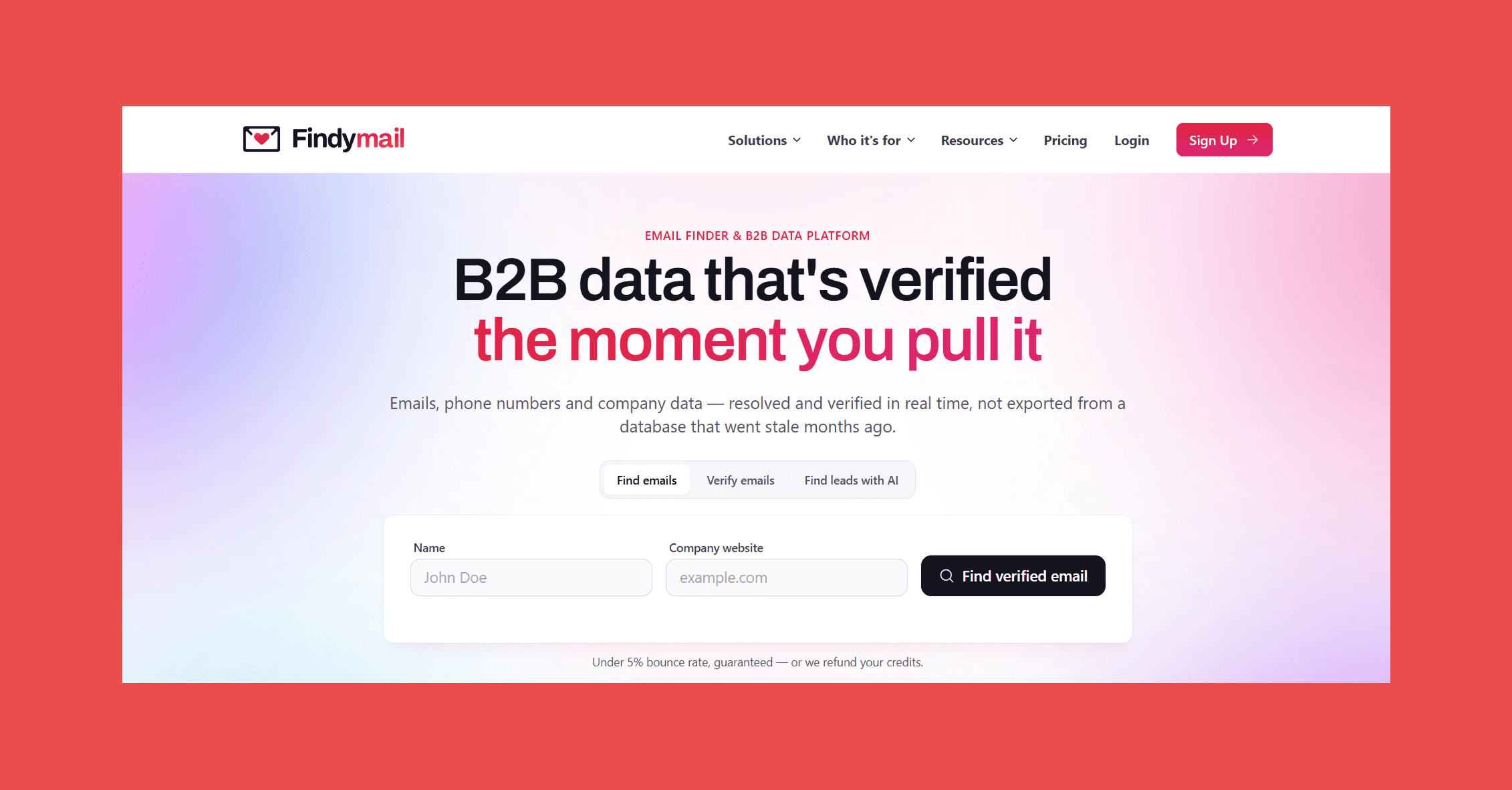
Findymail started as a passion project to fix one problem: emails that looked right on paper but never reached an inbox. That focus still runs through our product today. Findymail can find emails and direct phone numbers, verifies every email the moment it's found, and keeps bounce rates under 5%. Around that core, sits Intellimatch, which turns a plain-English ICP description into ranked companies and contacts, and Signals, which flags buying events like new hires and job title changes.
For teams coming from Kaspr, the practical difference is where prospecting starts. You can still work from a profile page, but you can also start from a CSV, a company domain, a description of your ideal customer or a signal.
What it offers:
- Email Finder with real-time verification, catch-all addresses included
- Phone Finder for direct mobile numbers and direct dials
- Email Verifier for cleaning lists you already have
- Chrome extension for finding contacts while viewing supported profile pages
- Bulk finding from CSV or XLS files, plus Google Sheets
- Intellimatch AI lead finder and Signals intent monitoring
- Integrations with HubSpot, Salesforce, Pipedrive, Instantly, Smartlead and Lemlist, plus Zapier, Make and an API
How it works:
Findymail works from wherever your prospect list starts. Find one contact at a time with Single Search or the Chrome extension on a supported profile page, or upload a CSV and let bulk finding work from names, LinkedIn URLs or company domains. Teams already building lists in Clay can run Findymail inside their tables, and Intellimatch and Signals add two more starting points: a description of your ICP or a buying event.
Every email comes back verified in real time, so Findymail-sourced contacts never need a second verification pass. The Email Verifier is there for lists you've picked up elsewhere, in the app or through Google Sheets. From there, contacts sync to your CRM or outbound tool through native integrations, or through the API if yours isn't on the list.
How Findymail differs from Kaspr:
| Factor | Kaspr | Findymail |
|---|---|---|
| Core job | LinkedIn contact enrichment | Verified contact finding and prospecting |
| Starting point | LinkedIn profile or search | Name, domain, CSV, Intellimatch or Signals |
| Email data | ✓ | ✓ (verified in real time, catch-alls included) |
| Phone data | ✓ | ✓ |
| Browser extension | LinkedIn, Sales Navigator, Recruiter Lite | Supported profile pages |
| Bulk enrichment | ✓ (LinkedIn searches and URL lists) | ✓ (CSV/XLS, Google Sheets) |
| Verify an existing list | ✗ | ✓ (Email Verifier) |
| AI prospect discovery | ✗ | ✓ (Intellimatch) |
| Intent data | Enterprise plan | ✓ (Signals) |
| Pricing model | Per user, separate email, phone and export credits | Credits charged only for verified contacts |
Kaspr is built around revealing contact details inside a LinkedIn workflow. Findymail is built around making sure the contact you export is one you can reach: every email is verified in real time, and the Email Verifier cleans lists from anywhere else. It also widens the front of the funnel, because Intellimatch finds prospects from a written ICP description and Signals flags people at the moment they join a company or change roles.
Ratings
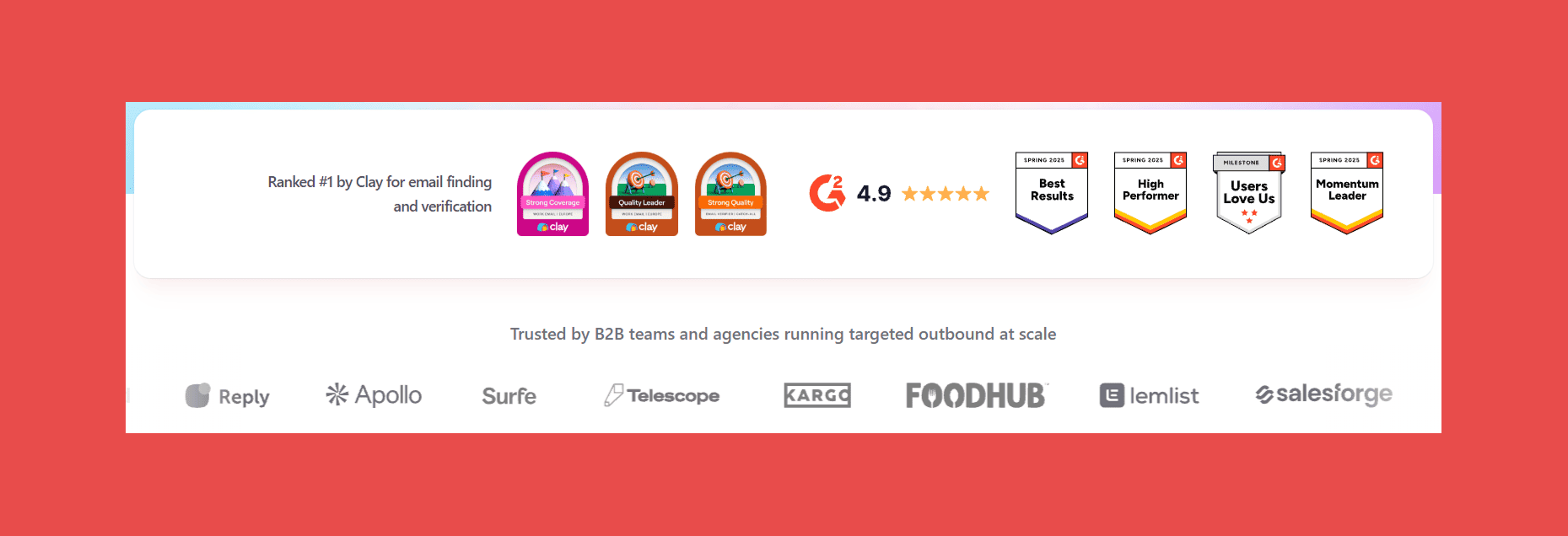
- G2: 4.9/5 (57)
- Capterra: 4.9/5 (7)
Pros
- Every email is verified before export, so what lands in your sequencer is what you'd actually send to
- Sub-5% bounce rate, with a refund if it's ever exceeded
- Prospecting doesn't have to start from a profile you've already found
- You only pay for verified contacts, and duplicates aren't charged twice
- Unused credits roll over up to 2x your monthly allowance
- Every plan includes every feature, with nothing locked behind a higher tier
Cons
- No built-in sequencing or sending
- Phone lookups cost 10 Finder credits each
- Signals covers four signal types rather than a wide signal library
Pricing
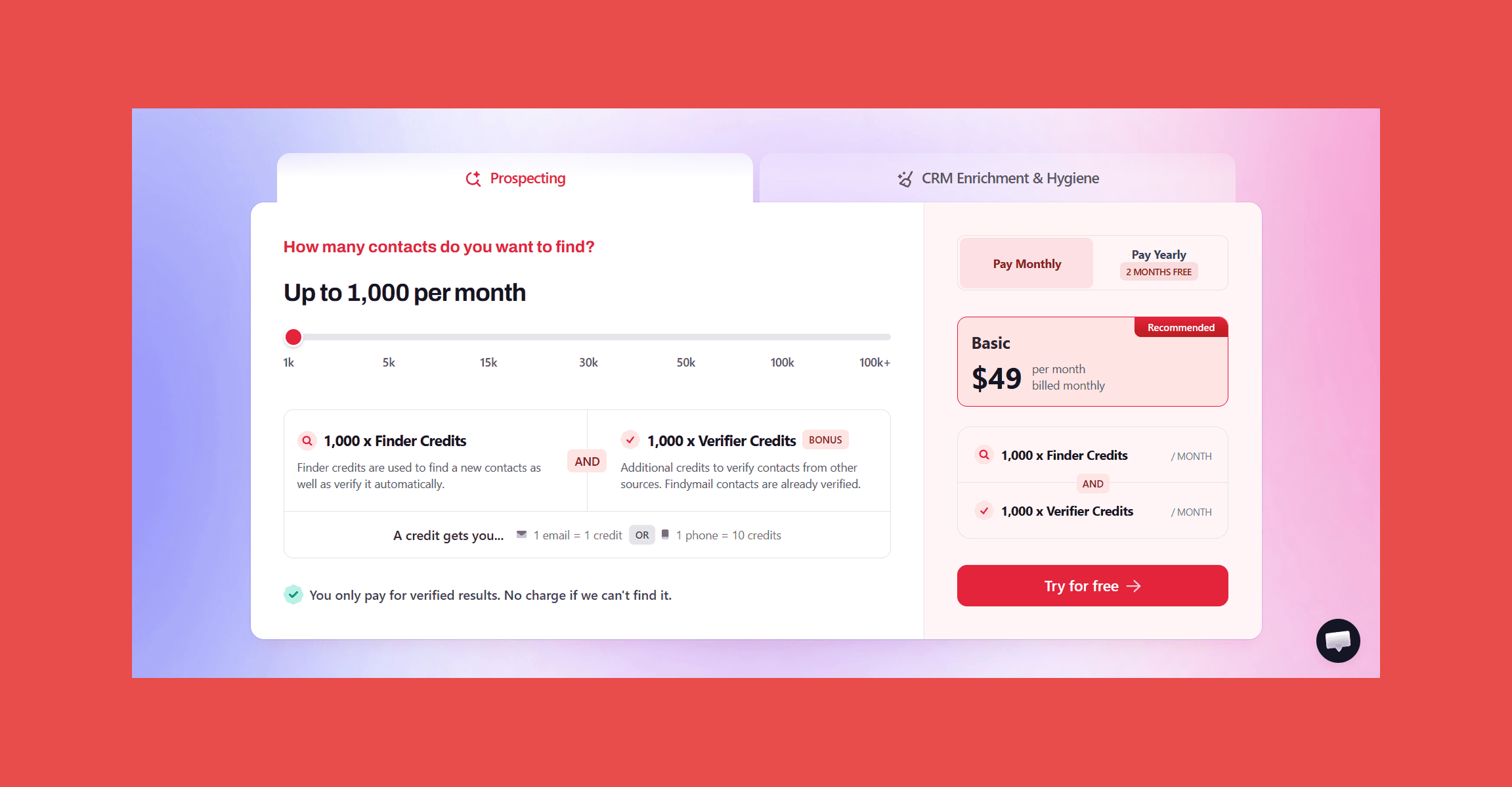
Findymail plans, with Finder and Verifier credits matched at each tier:
- Basic: $49/month for 1,000 credits
- Starter: $99/month for 5,000 credits
- Business: $249/month for 15,000 credits
- Business Plus: $399/month for 30,000 credits
- Scale 50K: $549/month for 50,000 credits
- Scale 100K: $849/month for 100,000 credits
- Enterprise: custom
Intellimatch takes a plain-English description of your ICP, analyzes company websites to rank the best matches, and returns verified contacts for the job titles you pick.
2. Cognism
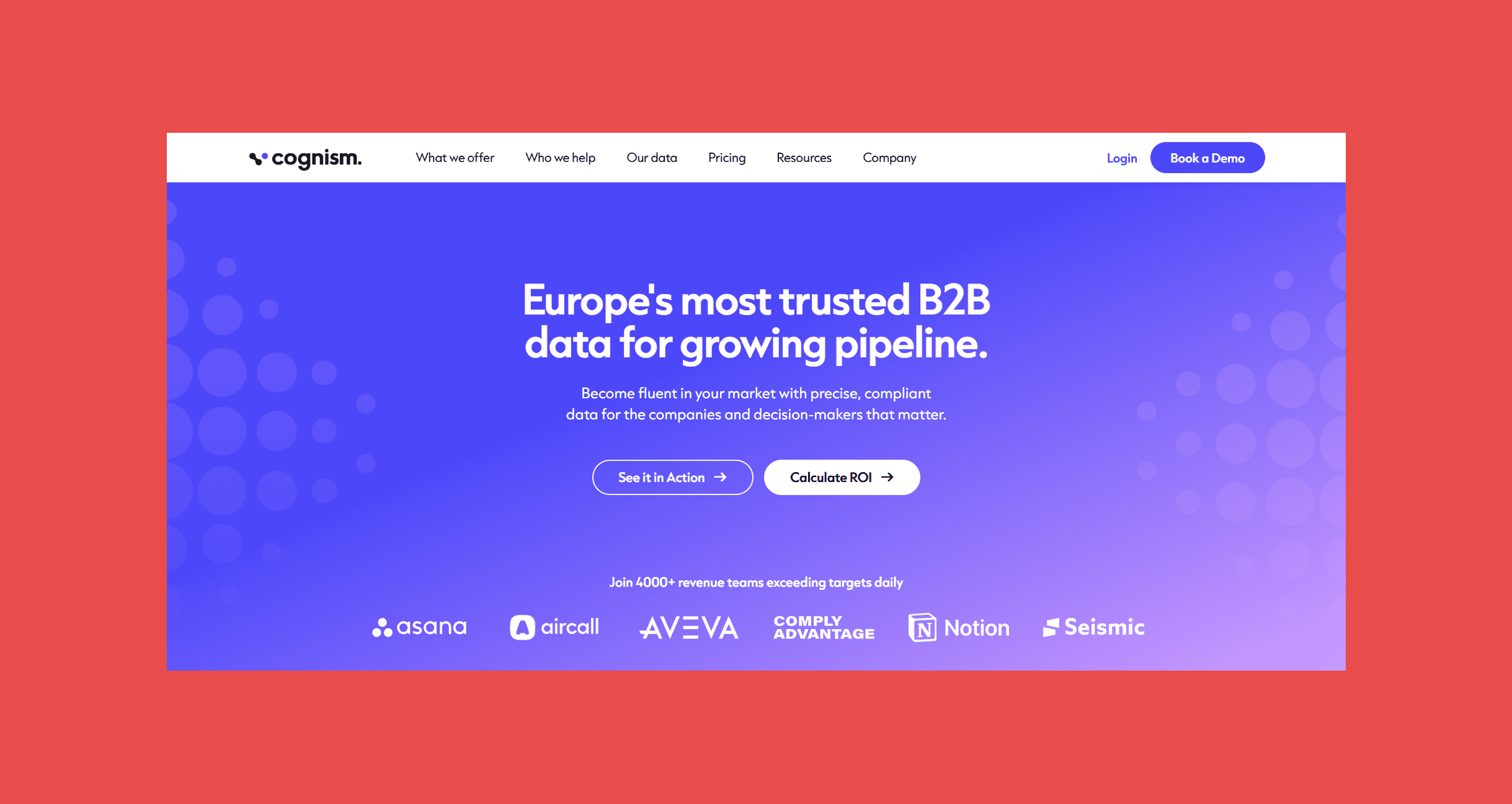
Cognism is a B2B sales intelligence platform, and it also happens to own Kaspr. The two products split the market between them: Kaspr is the self-serve, LinkedIn-first extension, while Cognism is the full platform with a searchable contact and company database, phone-verified mobile numbers it brands as Diamond Data, and intent data and buying signals on its higher tier. It has a strong reputation for EMEA coverage and compliance, which is why teams that outgrow Kaspr often end up in a Cognism demo.
What it offers:
- B2B contact and company data with firmographic, technographic and signal-based filters
- Phone-verified mobile numbers (Diamond Data) with on-demand verification
- Buying intent and job change tracking
- AI-assisted account research
- Browser extension for LinkedIn and company websites
- CRM Enrichment, as an add-on or standalone product
How it works:
Most searches start on the Companies tab, where you narrow accounts by location, headcount, industry, tech stack, company events like hiring or funding, and intent topics. Switching to the Contacts tab shows the people at those companies, which you can filter further by job title, seniority or whether they have a verified mobile. Reveal their details, then add them to a list or export them.
Cognism vs. Kaspr:
| Factor | Kaspr | Cognism |
|---|---|---|
| Core job | LinkedIn contact enrichment | Sales intelligence platform |
| Starting point | LinkedIn profile or search | Company and contact search |
| Email data | ✓ | ✓ |
| Phone data | ✓ | ✓ (phone-verified mobiles) |
| Company data | Contact-focused | ✓ (job changes and AI research) |
| Intent data | Enterprise plan | Pro plan |
| Pricing model | Per user, separate email, phone and export credits | Custom, sales-led |
| Best fit | Individual reps and recruiters | Enterprise revenue teams |
The comparison comes down to scope. If you want contact details inside a LinkedIn workflow, Kaspr covers it with a much smaller commitment. If you need a searchable database, verified mobiles for heavy calling and signals in the same place, Cognism is the bigger platform built for that.
Ratings

- G2: 4.5/5 (1,370)
- Capterra: 4.7/5 (263)
Pros
- Phone-verified mobiles suit teams that spend a lot of time on cold calls
- Well regarded for EMEA data and compliance
- Contact data, company data and signals in one platform
Cons
- No published pricing
- Platform fee makes it expensive for small teams
- Intent data only on the Elevate tier
- More platform than a team needing LinkedIn lookups requires
Pricing
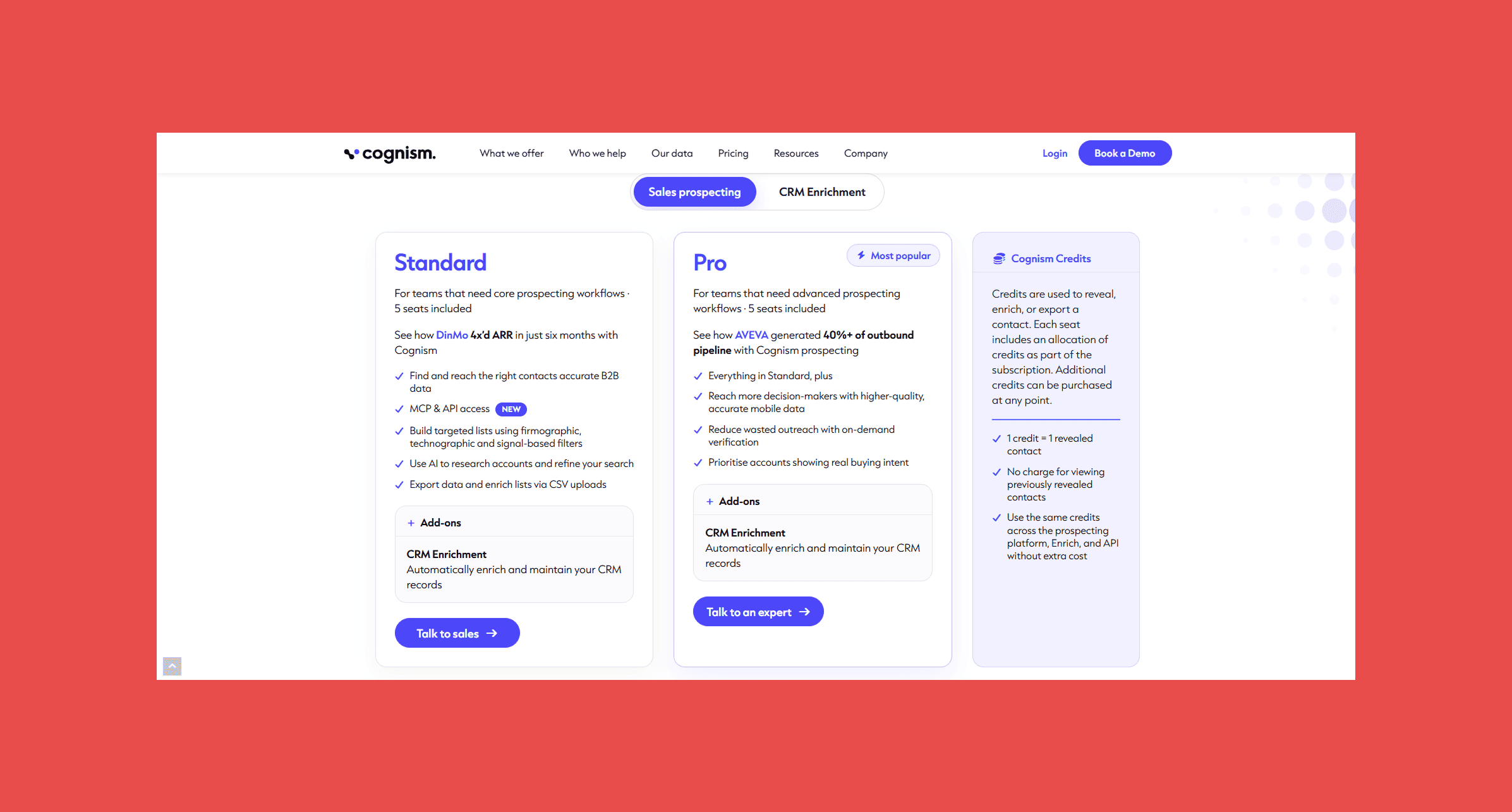
- Standard: custom, 5 seats included, covering core prospecting, filters, AI research, CSV enrichment and API access
- Pro: custom, 5 seats included, adding higher-quality mobile data, on-demand verification and buying intent
3. Lusha
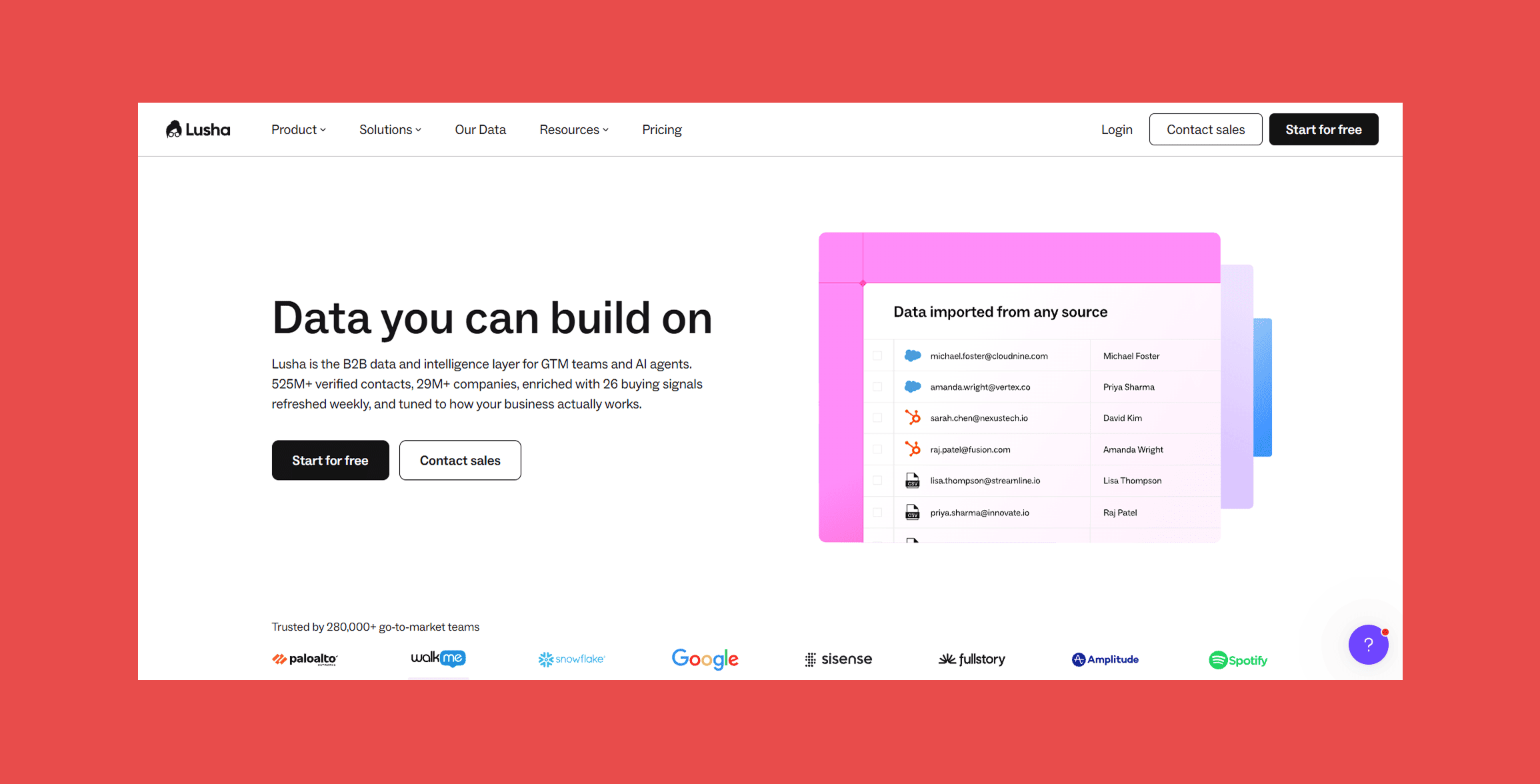
Lusha is probably the closest like-for-like Kaspr alternative, and its strength is flexibility. The extension reveals emails and phone numbers on LinkedIn, Sales Navigator and company websites, but a searchable prospecting database sits behind it, along with an AI Workspace that builds prospect tables from a plain-English description. Built-in email sequences mean reps can go from finding a contact to emailing them without leaving the platform.
What it offers:
- Verified emails and phone numbers
- Prospect Search with filters for job title, seniority, industry, location and company size
- Workspace, which builds prospect tables from a plain-English description
- Browser extension for Chrome and Edge, on LinkedIn, Sales Navigator and company websites
- CSV enrichment through the Enrich page
- Engage email sequences and buying intent topics
How it works:
Most prospecting happens in Prospect Search, where you filter by role, industry, location and company size, or in Workspace, where you describe your ideal prospect and let the AI build the table. Revealing contact details spends credits, and from there contacts can go into an Engage email sequence or out as a CSV.
Lusha vs. Kaspr:
| Factor | Kaspr | Lusha |
|---|---|---|
| Core job | LinkedIn contact enrichment | Contact discovery and enrichment |
| Starting point | LinkedIn profile or search | Prospect Search, Workspace or extension |
| Email data | ✓ | ✓ |
| Phone data | ✓ | ✓ |
| Browser extension | LinkedIn, Sales Navigator, Recruiter Lite | LinkedIn, Sales Navigator, company websites |
| Bulk enrichment | ✓ (LinkedIn searches and URL lists) | ✓ (Enrich page) |
| AI prospect discovery | ✗ | ✓ (Workspace) |
| Sequencing | ✗ | ✓ (Engage) |
| Pricing model | Per user, separate email, phone and export credits | One credit pool, seats by tier |
| Free option | Free plan | Free plan |
The difference is less about data type and more about workflow. Kaspr keeps you inside LinkedIn, while Lusha lets you prospect from its own database too. Coverage varies by market for both, so the fairest test is running the same fifty prospects from your territory through each.
Ratings
- G2: 4.3/5 (1,667)
- Capterra: 4.3/5 (1,667)
Pros
- Database search, AI table building and the extension in one tool
- Built-in email sequences, so outreach doesn't need another tool
- Free plan with 40 credits a month for testing data quality
Cons
- Starter's 400 monthly credits go quickly
- Adding seats means moving up a tier
- API access starts on Pro
- Credit rollover only on Pro and above
Pricing
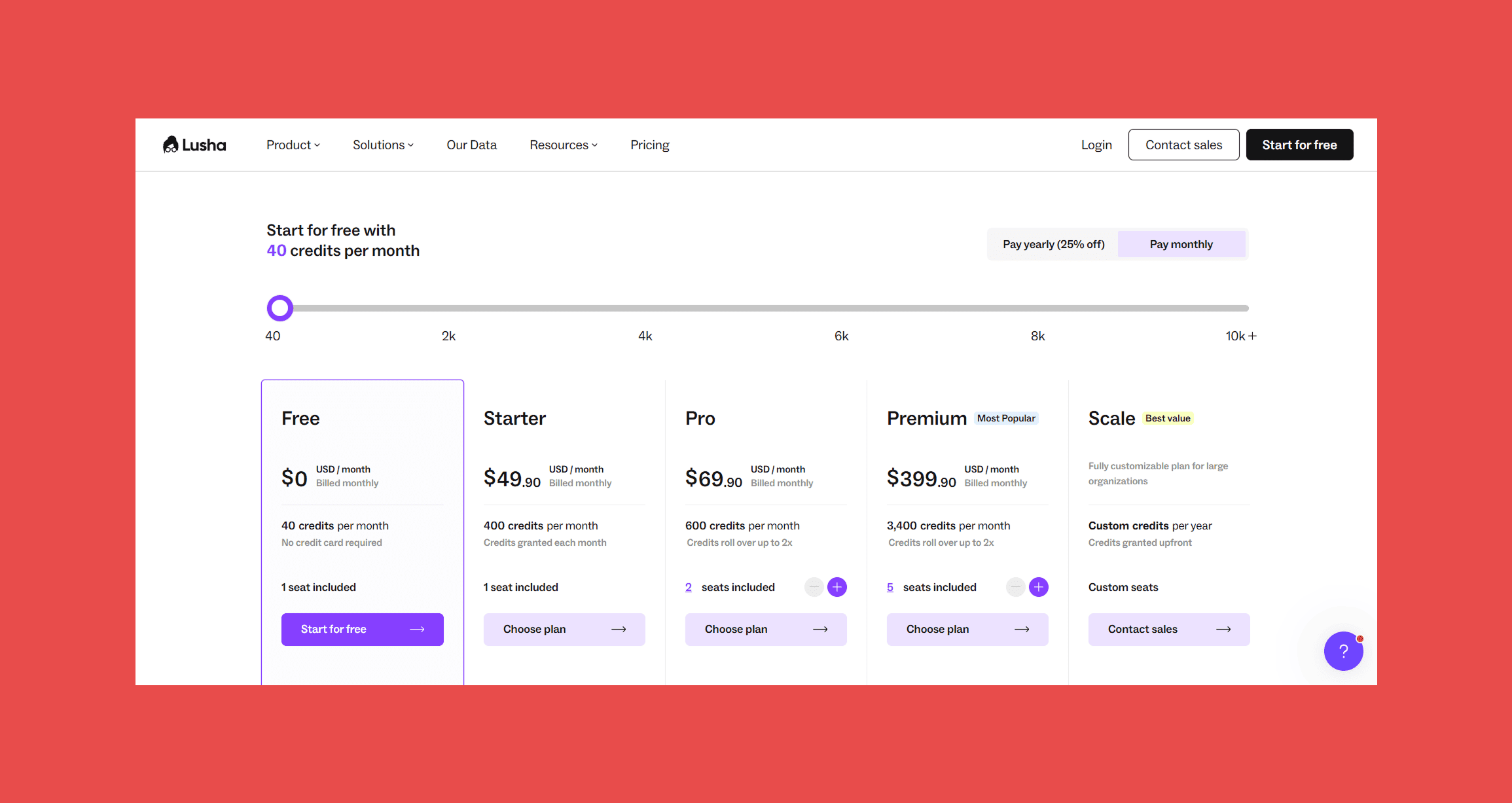
- Free: $0/month for 40 credits, 1 seat
- Starter: $49.90/month for 400 credits, 1 seat
- Pro: $69.90/month for 600 credits, 2 seats
- Premium: $399.90/month for 3,400 credits, 5 seats
- Scale: custom
4. Waalaxy
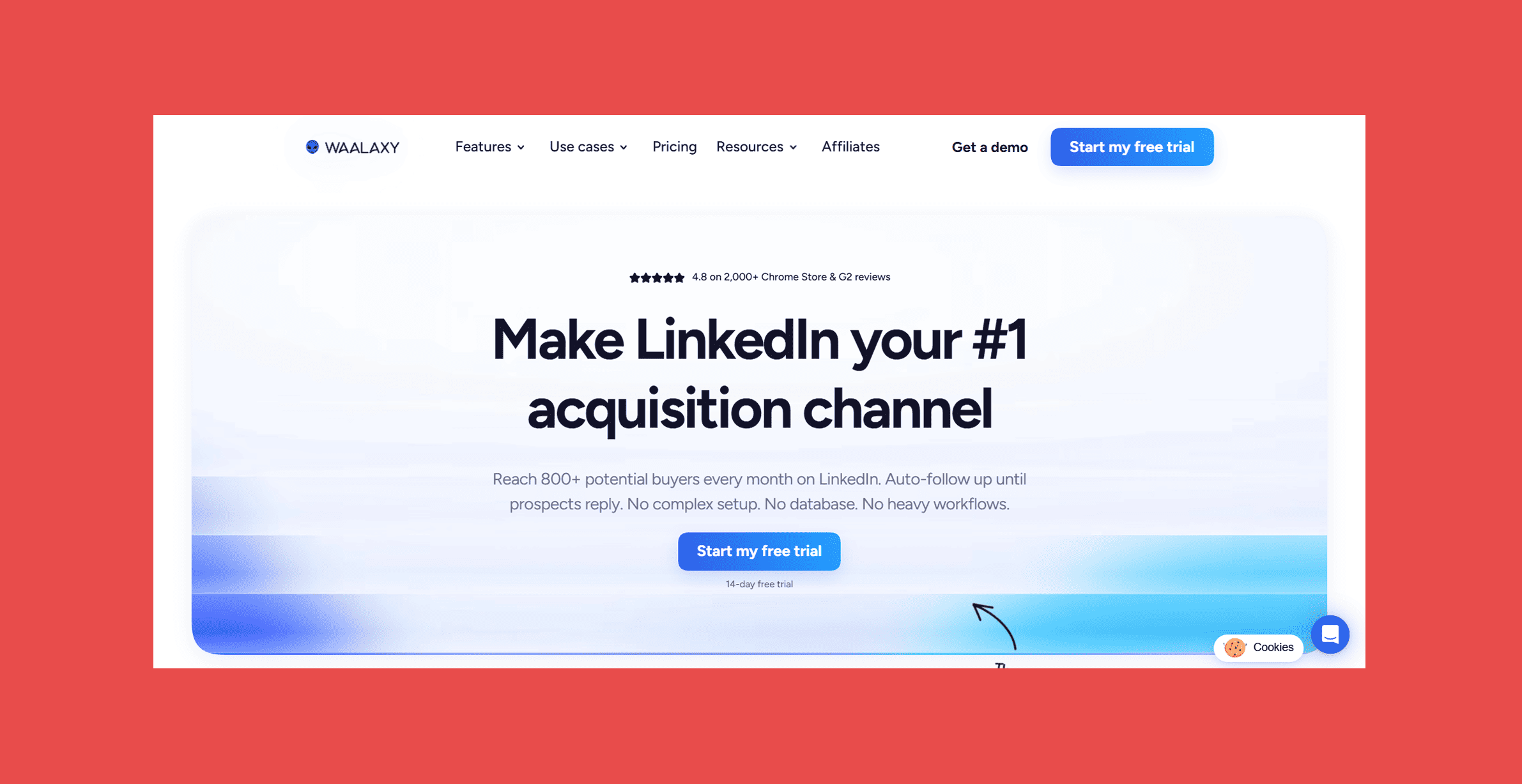
Waalaxy isn't a contact database, so it isn't a one-to-one Kaspr replacement. It automates what usually happens after the lookup: connection requests, messages and follow-ups on LinkedIn, built from prebuilt campaign templates, with cold email steps added on its Business plan. Teams whose bottleneck is the outreach rather than the data tend to get more from it than from another enrichment tool.
What it offers:
- Prospect imports from LinkedIn and Sales Navigator searches, with auto-imports to keep lists topped up
- Prebuilt sequence templates for invitations, messages and follow-ups
- Waami, an AI writer for first-draft messages
- Inbox for managing LinkedIn replies, with tags, saved templates and follow-up reminders
- Campaign analytics for acceptance and reply rates
- Cold email sequences and 500 email finder credits (Business plan)
How it works:
You run a LinkedIn or Sales Navigator search, paste the URL into Waalaxy to import the prospects, then drop them into a sequence template such as an invitation followed by three messages. Once the campaign is live, Waalaxy sends connection requests and follow-ups automatically, and replies land in the Inbox, where you can tag and answer them.
Kaspr vs. Waalaxy:
| Factor | Kaspr | Waalaxy |
|---|---|---|
| Core job | LinkedIn contact enrichment | LinkedIn outreach automation |
| Email data | ✓ | Email finder credits (Business plan) |
| Starting point | LinkedIn profile or search | LinkedIn or Sales Navigator search URL |
| Sequencing | ✗ | ✓ (LinkedIn; email on Business) |
| Reply management | ✗ | ✓ (Inbox) |
| Free option | Free plan | 14-day free trial |
Kaspr answers "how do I reach this person?" while Waalaxy answers "how do I contact two hundred of them without clicking all day?" Both start on LinkedIn and both can find email addresses, which is where they overlap, and plenty of teams run them side by side.
Ratings

- G2: 4.5/5 (1,600)
- Capterra: 4.4/5 (253)
Pros
- Takes repetitive LinkedIn outreach off reps' plates
- Low entry price for LinkedIn-only campaigns
- Template sequences make a first campaign quick to launch
- Replies stay in one Inbox instead of scattered LinkedIn threads
Cons
- Not a dedicated contact data provider
- Cold email and email finder credits only on Business
- LinkedIn automation carries account-restriction risk
- Pro plan capped at 300 invitations a month
- No free plan, only a 14-day trial
Pricing
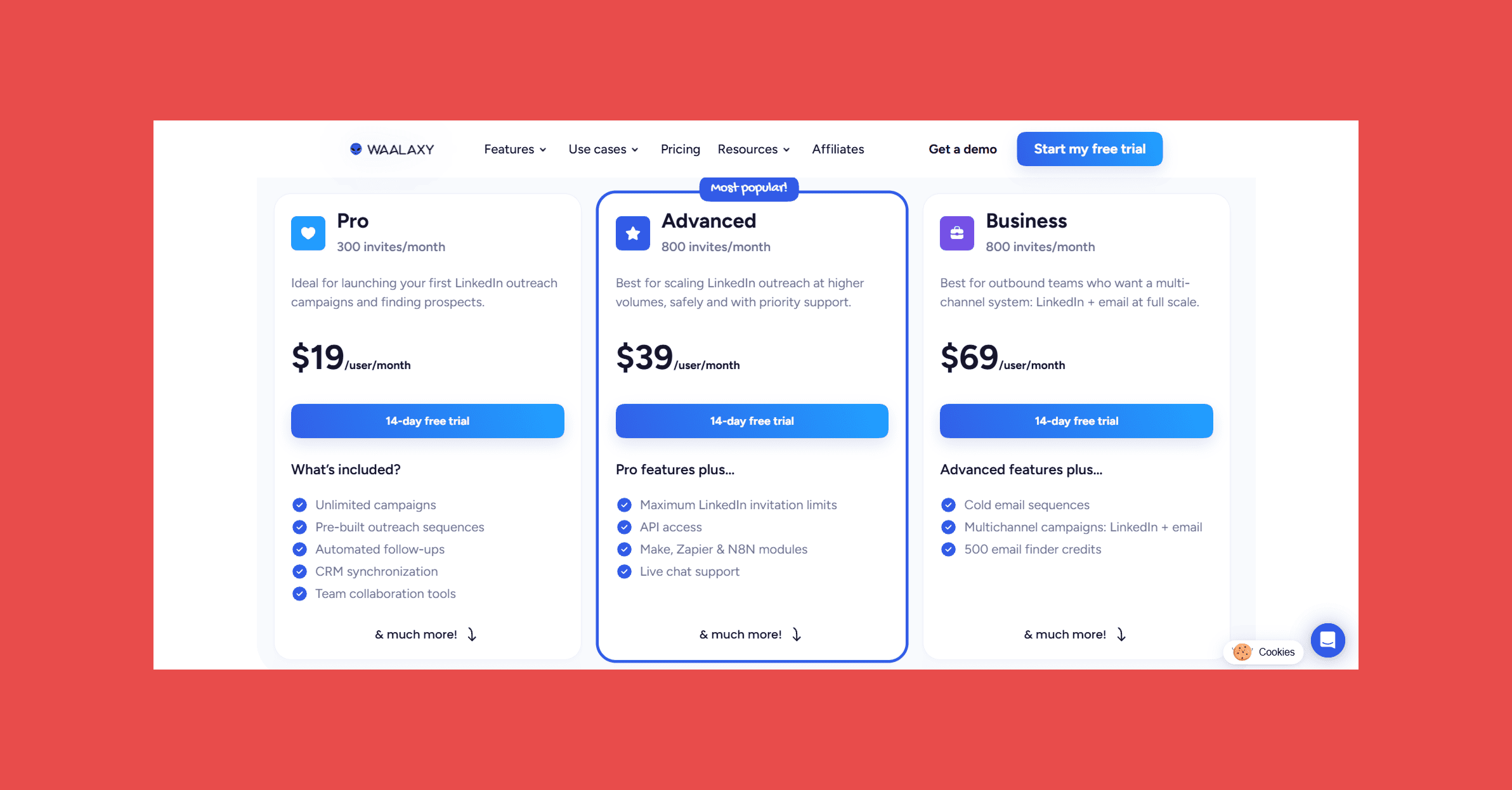
Per user, monthly billing:
- Pro: $19/month for 300 invitations a month
- Advanced: $39/month for 800 invitations a month
- Business: $69/month for 800 invitations a month, plus cold email and multichannel campaigns
5. Apollo
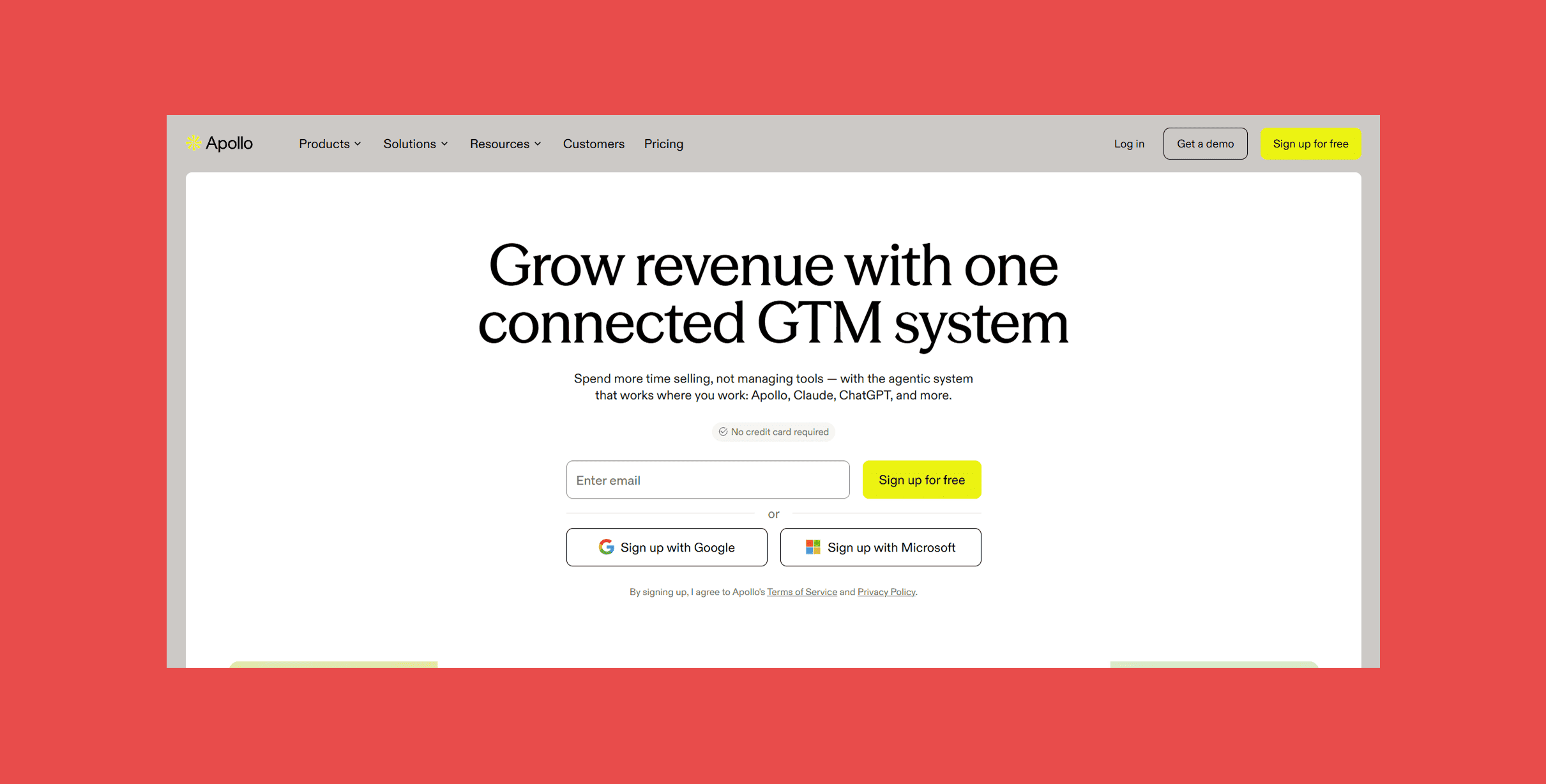
Apollo's strength is breadth. It combines a large B2B contact and company database with sequencing, calling and analytics, so a team can build a list and work it without switching tools. Unlike Kaspr's LinkedIn-oriented workflow, it starts from its own database filters rather than a profile.
What it offers:
- A database of hundreds of millions of people and companies, searchable with ICP and persona filters
- Buying intent and signal filters, plus lookalike companies
- AI research on prospects and an AI writing assistant
- Multichannel sequences for email, calls and LinkedIn tasks
- Scheduled enrichment to keep contact data fresh
- Meetings, deals and reporting in the same platform
How it works:
Apollo's own playbook starts with your ICP: you filter companies by size, industry, location and revenue, narrow further with intent or signals, and save the result as a list. A persona, built from job titles, departments or locations, then pulls the right people from those accounts. From there, sequences handle outreach across email, calls and LinkedIn tasks, and meetings and deals are tracked in the same place.
Kaspr vs. Apollo:
| Factor | Kaspr | Apollo |
|---|---|---|
| Core job | LinkedIn contact enrichment | Prospecting, outreach and pipeline in one |
| Starting point | LinkedIn profile or search | Database search with ICP and persona filters |
| Email data | ✓ | ✓ |
| Phone data | ✓ | ✓ |
| Sequencing | ✗ | ✓ (email, calls, LinkedIn tasks) |
| Intent data | Enterprise plan | ✓ (buying intent filters) |
| Pricing model | Per user, separate email, phone and export credits | Per user, credits allocated per seat |
| Free option | Free plan | Free plan |
Kaspr hands contacts off to other tools; Apollo wants to be those tools. If you're happy with your current sequencer, that's more platform than you need.
Ratings

- G2: 4.7/5 (9,838)
- Capterra: 4.5/5 (398)
Pros
- Prospecting, outreach and pipeline in one platform
- Free plan with 75 credits a month
- Personas and lookalikes make it easy to build lists beyond LinkedIn
Cons
- More platform than enrichment-only teams need
- Credits are allocated per seat, so costs scale with headcount
- Organization plan is annual-only with a three-seat minimum
Pricing
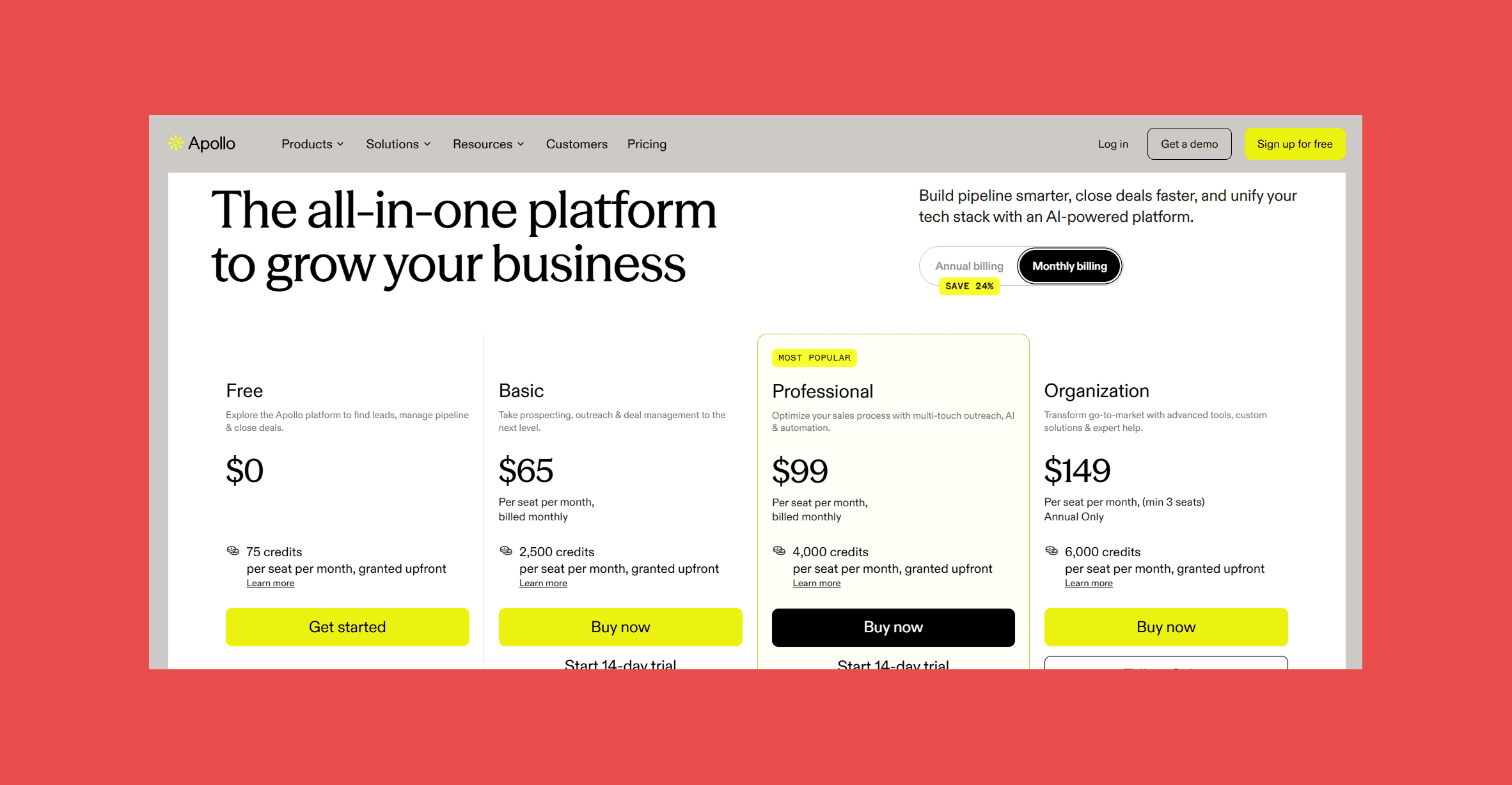
Per user, monthly billing:
- Free: $0 for 75 credits a month
- Basic: $65/month for 2,500 credits a month
- Professional: $99/month for 4,000 credits a month
- Organization: $149/month for 6,000 credits a month (three-seat minimum, annual billing only)
6. Hunter
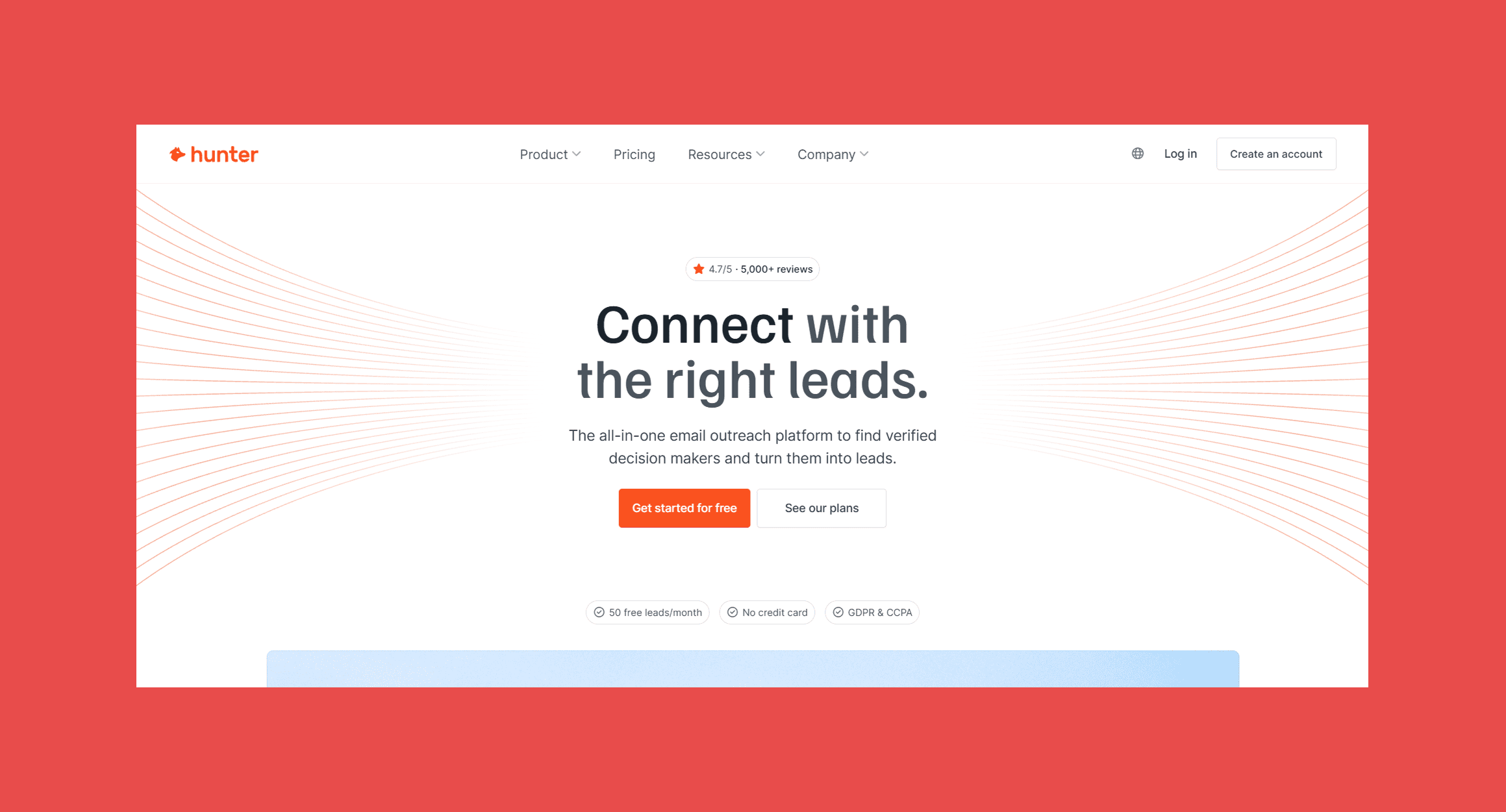
Hunter started in 2015 as an email finder built on publicly available web data and has grown into an all-in-one cold outreach platform. What it does best is still email: it finds professional addresses from a name or company domain, verifies each one before you see it, and only charges credits for valid results. It doesn't do phone numbers, but for email-only outbound, that focus keeps the workflow short.
What it offers:
- Discover, a company search with filters for location, industry, keywords and technologies
- Domain Search and Email Finder, for single or bulk lookups
- Email Verifier, with free monthly re-verification of saved leads on paid plans
- Leads, a lightweight lead manager for organizing and enriching contacts
- Sequences with automated follow-ups and an AI Writing Assistant
- Signals for funding rounds, job openings and company changes
How it works:
Most prospecting starts in Discover, where you filter companies by your ICP, or in Domain Search, where a company domain returns the addresses Hunter has found there. Every email is verified before it's shown, and saved leads are re-verified monthly on paid plans. From there, leads can go straight into a Sequence.
Kaspr vs. Hunter:
| Factor | Kaspr | Hunter |
|---|---|---|
| Core job | LinkedIn contact enrichment | Email finding, verification and outreach |
| Starting point | LinkedIn profile or search | Company domain, name or Discover search |
| Email data | ✓ | ✓ (verified before you see it) |
| Phone data | ✓ | ✗ |
| Verify an existing list | ✗ | ✓ |
| Sequencing | ✗ | ✓ (Sequences) |
| Pricing model | Per user, separate email, phone and export credits | Shared credits, unlimited team members |
| Free option | Free plan | Free plan (50 credits) |
Hunter trades phone numbers for verification and a domain-first workflow, which suits email-only outbound better than LinkedIn-led prospecting
Ratings

- G2: 4.4/5 (657)
- Capterra: 4.7/5 (713)
Pros
- Credits are only spent on valid emails
- Unlimited team members on every plan, with no per-seat fees
- Free monthly re-verification of saved leads on paid plans
- Free plan with 50 credits a month
Cons
- No phone numbers
- Less suited to a LinkedIn-first workflow
- Searches and verifications draw from the same credits
- Free plan connects only one email account
Pricing
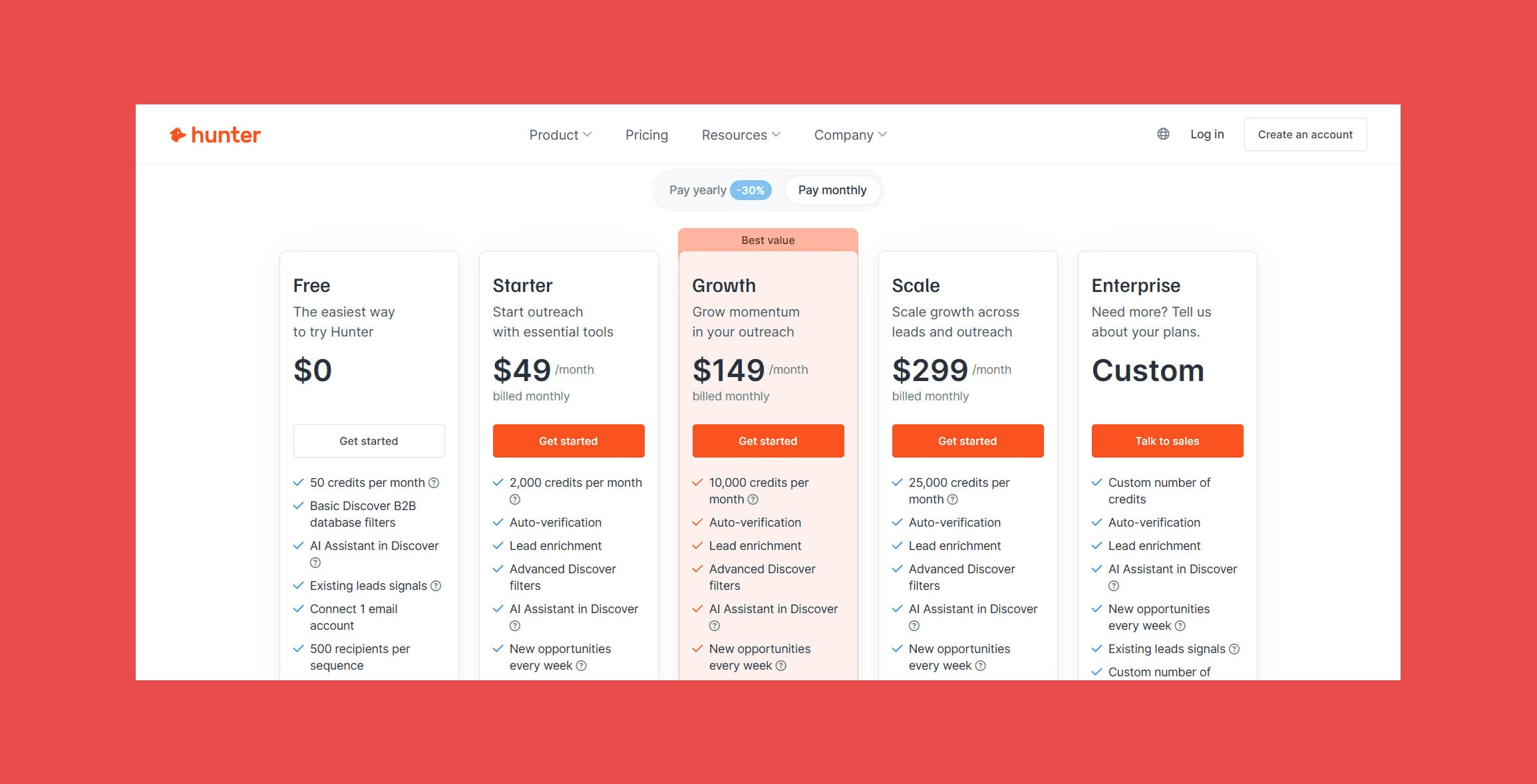
- Free: $0 for 50 credits a month
- Starter: $49/month for 2,000 credits a month
- Growth: $149/month for 10,000 credits a month
- Scale: $299/month for 25,000 credits a month
- Enterprise: custom
7. RocketReach
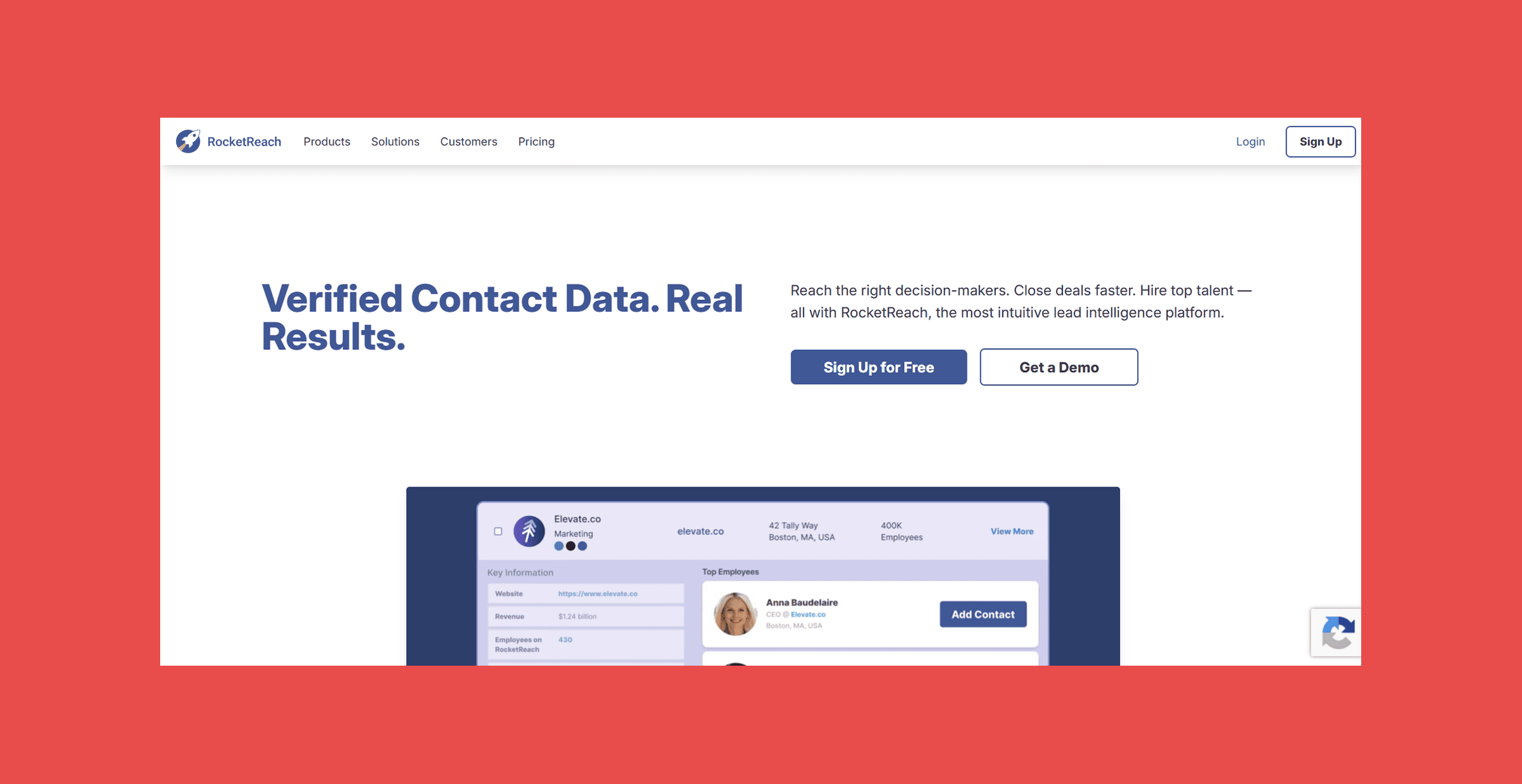
RocketReach is a contact lookup platform backed by what it reports as 700M+ profiles across 60M companies, and its strength is the number of ways in. You can search by name, title, employer or skills, look someone up while browsing a social profile or company website, or upload a list for bulk enrichment, with verified emails on every plan and phone numbers from Pro up.
What it offers:
- Filtered search by name, title, department, industry, skills, location and employer
- Verified personal and professional emails, with mobile and direct dials from Pro
- Chrome extension for social profiles and company websites
- Upload List for bulk enrichment by name or domain
- Autopilot for pulling large result sets automatically, on a schedule if needed
- Technographics, news and org charts, plus intent data on Ultimate
How it works:
Most lookups start in filtered search or with the extension on a profile or company page. Clicking Get Contact Info reveals the verified email or phone number, and only a reveal spends a lookup. For bigger lists, Autopilot pulls hundreds or thousands of matching contacts at once, and everything lands in My Contacts for export.
Kaspr vs. RocketReach:
| Factor | Kaspr | RocketReach |
|---|---|---|
| Core job | LinkedIn contact enrichment | Contact lookup database |
| Starting point | LinkedIn profile or search | Filtered search, extension or list upload |
| Email data | ✓ | ✓ (professional and personal) |
| Phone data | ✓ | ✓ (Pro and above) |
| Company data | Contact-focused | ✓ (technographics and org charts from Pro) |
| Bulk enrichment | ✓ (LinkedIn searches and URL lists) | ✓ (Upload List, Autopilot) |
| Pricing model | Per user, separate email, phone and export credits | Per user, lookups and exports by plan |
| Free option | Free plan | ✗ (from $49/month) |
Both cover email and phone; the difference is where you start. Kaspr works from LinkedIn, while RocketReach lets you search its own database directly.
Ratings

- G2: 4.4/5 (1,385)
- Capterra: 4.1/5 (140)
Pros
- Several ways in: search, extension or list upload
- A lookup is only spent when contact details are revealed
- Autopilot handles large lists without manual clicking
Cons
- No phone numbers on Essentials
- Monthly lookups are low on lower tiers
- List uploads spend export credits as well as lookups
- Intent data only on Ultimate
Pricing
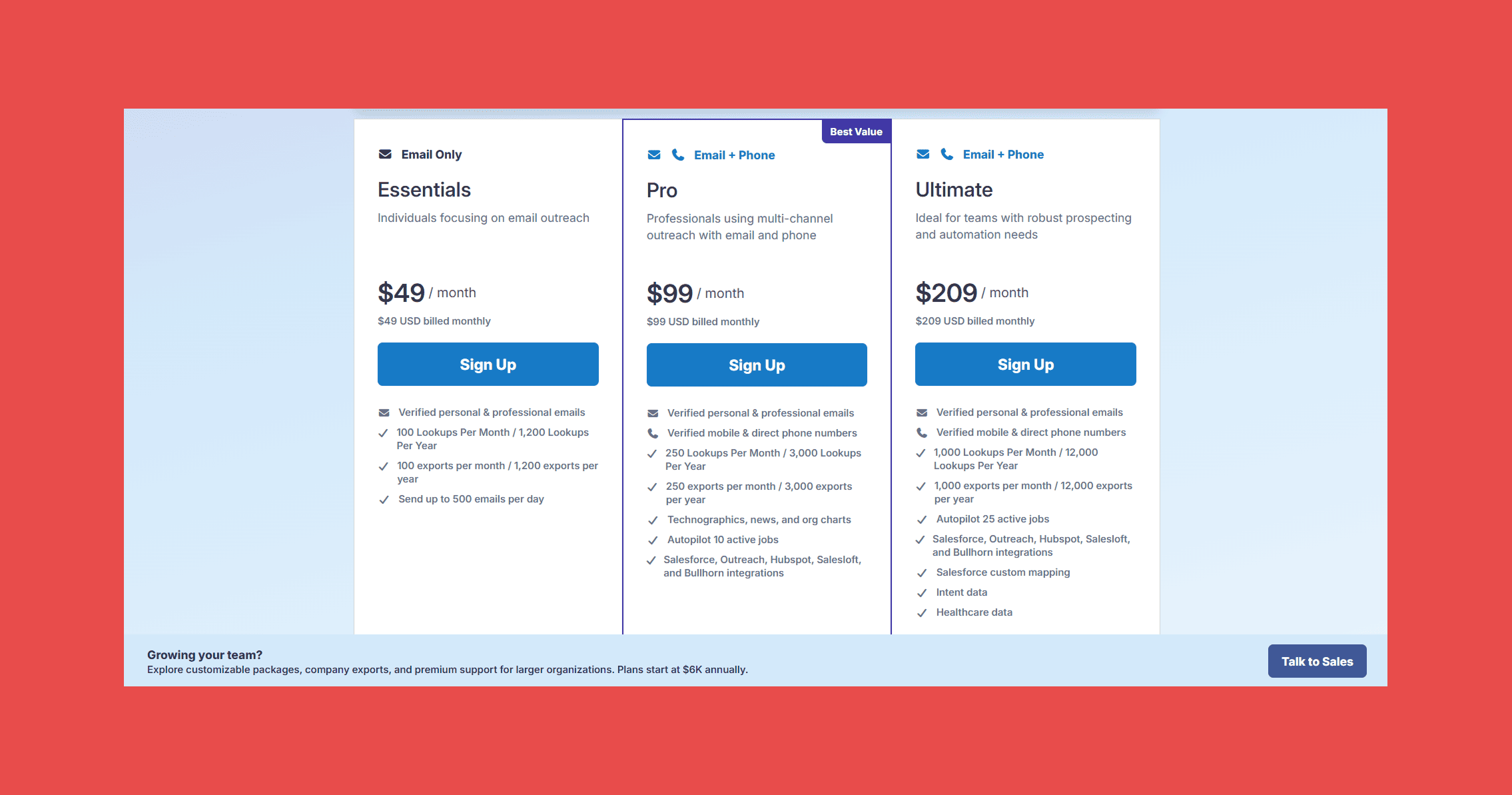
- Essentials: $49/month for 100 lookups and 100 exports a month (email only)
- Pro: $99/month for 250 lookups and 250 exports a month (email and phone)
- Ultimate: $209/month for 1,000 lookups and 1,000 exports a month (email and phone)
Final Thoughts
Kaspr does one job well: getting contact details off a LinkedIn profile and into your stack. Whether you need an alternative comes down to which part of that job your team has outgrown.
If it's discovery beyond LinkedIn, Lusha, Apollo and RocketReach give you a database to search; if it's outreach, Waalaxy and Apollo pick up where the lookup ends, and Cognism suits teams that have outgrown self-serve altogether. And if the problem is emails that look right but never land, that's the gap Findymail was built to close.
Findymail turns your ICP into verified emails and phone numbers, then pushes them to the CRM or sequencer you already use.
Frequently Asked Questions About Kaspr Alternatives
What are the best alternatives to Kaspr?
The best Kaspr alternative depends on what you need it to do. Findymail suits verified email and phone finding with AI lead discovery and intent signals. Cognism covers enterprise sales intelligence, Lusha and RocketReach are close contact-data rivals with searchable databases, and Waalaxy automates LinkedIn outreach. Apollo combines a database with sequencing, and Hunter focuses on email finding and verification.
Who are Kaspr's main competitors?
Grouped by primary function:
- Contact enrichment and lookup: Lusha, RocketReach
- Sales intelligence: Cognism, which also owns Kaspr
- LinkedIn automation: Waalaxy
- Email finding and verification: Findymail, Hunter
- Prospecting databases with engagement: Apollo
What is the best Kaspr alternative for email finding?
Contact enrichment tools reveal an email alongside other details, while dedicated email finders focus on getting an address that will actually be delivered. Hunter and Findymail both specialize here. Findymail verifies every email in real time, catch-all addresses included, and keeps bounce rates under 5%.
Is there a Kaspr alternative that doesn't rely on LinkedIn?
Yes. LinkedIn-first tools start from profiles, while standalone platforms let you search a database or start from company data. Apollo, Lusha, RocketReach and Cognism all have searchable databases, and Hunter works from company domains. Findymail works from names and domains, CSV files, Intellimatch ICP searches or Signals monitors.
How does Cognism compare with Kaspr?
Cognism owns Kaspr, but the two cover different scopes. Kaspr is a self-serve LinkedIn extension with published plans, and Cognism is a sales intelligence platform with a searchable database, phone-verified mobiles, intent data on its higher tier and custom annual pricing. Buyers should compare coverage in their regions, how much they rely on calling, and budget.
What is the difference between Kaspr and Waalaxy?
Kaspr finds contact details; Waalaxy automates LinkedIn outreach. Both start on LinkedIn and both can find email addresses, which is where they overlap, but only Waalaxy runs campaigns and follow-ups.
What is the difference between Kaspr and Lusha?
Both offer email and phone data through a browser extension, along with bulk enrichment and CRM integrations. Lusha adds a searchable prospecting database and uses a single credit pool, while Kaspr stays LinkedIn-first and splits credits into separate email, direct email, phone and export allowances. Coverage varies by region for both, so test them in your target markets.
Is there a Kaspr alternative with email verification?
Finding an email and knowing it will be delivered are two different problems, and catch-all domains widen the gap. Findymail verifies every email at the moment it's found, catch-alls included, and offers a separate Email Verifier for lists you already have. Hunter also combines finding and verification.
What should you look for in a Kaspr alternative?
Start with data quality and verification, then check email and phone coverage in your markets and whether you can prospect beyond LinkedIn. After that, compare bulk enrichment, CRM and sales engagement integrations, automation, and pricing, including how credits are split between emails, phones and exports.
Which Kaspr alternative is best for outbound sales?
It depends on the workflow:
- Verified email data: email finding and verification platforms such as Findymail and Hunter
- LinkedIn automation: LinkedIn-focused tools such as Waalaxy
- Enterprise sales intelligence: broader platforms such as Cognism
- All-in-one prospecting: database-plus-engagement platforms such as Apollo
- Contact lookup: B2B contact databases such as Lusha and RocketReach
- LinkedIn-to-verified-email workflow: tools such as Findymail

Valentin
Valentin Wallyn is the founder and CEO of Findymail, a SaaS platform he launched to help B2B teams discover accurate email and contact data and automate data enrichment at scale. With an IT background, Valentin combines a technical mindset with hands-on experience in outreach and growth. His work centers on improving data quality and prospecting efficiency, drawing on years of entrepreneurial experience and a deep understanding of what makes outreach campaigns succeed.